Stop Silent Drops in 2026: Renew TikTok Codes for Whitelisting Ads for Brands
12 min read
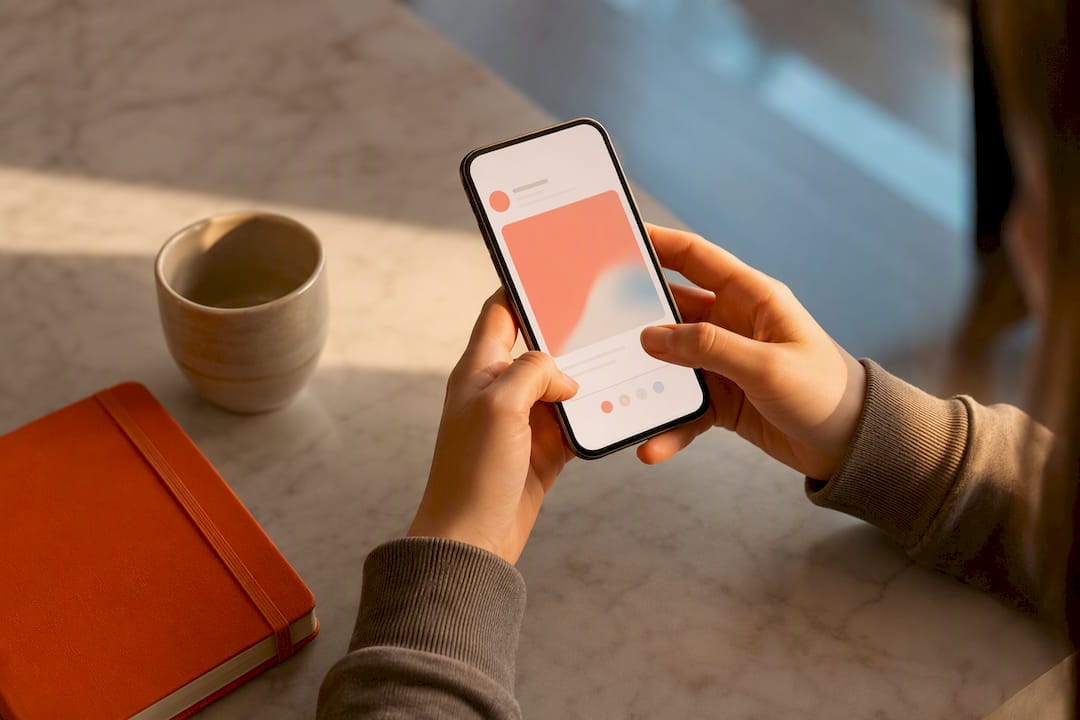
Creator whitelisting lets a brand run paid ads through a creator's handle, so the ad shows the creator's name and profile while the brand controls the targeting, budget, and reporting. The benefit is simple: you get the trust of a real creator sending the message, plus the precision of a brand media buy. It works best for top-of-funnel awareness, market entry, and building credibility fast, before you shift budget toward conversion-focused dark posts.
TL;DR:
- Whitelisting rights require clear contracts specifying duration, content scope, exclusivity, and renewal terms to avoid mid-campaign renegotiations or lapses.
- Most creator content performs better when whitelisted, but small budgets may favor dark posting or organic boosting due to overhead costs.
- Platforms like Meta, TikTok, YouTube, and Pinterest have distinct mechanisms for whitelisting, with code renewal management becoming increasingly critical in 2026.
- Campaign tracking should involve unique UTM parameters, side-by-side creative testing, and frequent authorization checks to ensure performance attribution and compliance.
- Vetting creators based on audience engagement, provenance-labeled metrics, and clear upfront rights exceeds follower count alone for successful whitelisting partnerships.
Table of Contents
- What Creator Whitelisting Ads Are (And How They Differ From Dark Posting)
- Setting Up Partnership Ads, Spark Ads, and BrandConnect in 2026
- Whitelisting vs. Dark Posting vs. Brand-Handle Ads: When Each One Wins
- Contracts, Rights, and Pricing: What to Lock Down Before You Get Access
- Measurement, Attribution, and Your Launch Checklist
- What Influenna Sees Brands Get Wrong Before They Even Start
- The Next Two Years of Whitelisting Will Reward Operational Discipline
- Find Vetted Creators Before You Negotiate Whitelisting Rights
- Sources
- FAQ
What Creator Whitelisting Ads Are (And How They Differ From Dark Posting)
Whitelisting is not a single feature. It is a permission structure with different names depending on the platform: allowlisting on Meta and Pinterest, Partnership Ads on Instagram and Facebook, and Spark Ads on TikTok. Each lets a brand pay to boost a post that still displays the creator's handle, avatar, and follower context to anyone scrolling past it.
Dark posting is the opposite instinct. A brand buys ad space, runs the creative under its own account, and the post never appears on the creator's public feed or profile grid. No one visiting the creator's page will ever see it. Brand-handle ads go a step further and strip out the creator identity entirely, running the same asset as a standard brand promotion.
The differences that matter for planning:
- Visibility: Whitelisted posts live on the creator's profile and can be liked, commented on, and shared as organic content, even while running as a paid unit. Dark posts and brand ads never appear there.
- Social proof: A whitelisted ad carries the creator's existing follower relationship into the ad unit itself, which is why it tends to outperform brand-handle ads on CTR and CPM for cold audiences.
- Control: The brand gets Ads Manager level control over targeting, bidding, and placement, but the creator typically retains some approval rights over edits, captions, or removal timing.
A viewer scrolling their feed sees a post from a creator they already follow, complete with the follower's usual voice and visual style, sitting inside a paid unit they would otherwise scroll past from a brand.
Setting Up Partnership Ads, Spark Ads, and BrandConnect in 2026
Each platform routes whitelisting through a different mechanism, and 2026 brought real operational changes worth building into your workflow now.
- Meta (Instagram and Facebook) Partnership Ads. The creator tags the brand as a partner on their post through the Partnership Ads Hub, which grants the brand access to boost that specific post from Ads Manager using their own campaign objectives and budget. As of 2026, Partnership Ads now appear in Meta's Ad Library showing both the brand and creator identity, and any AI-generated or AI-edited content in the post requires a disclosure label.
- TikTok Spark Ads. The creator generates an authorization code inside TikTok's creator tools and shares it with the brand, who pastes it into TikTok Ads Manager to unlock boosting rights on that specific video. The catch: TikTok shortened its default authorization code duration in 2026, meaning codes that once ran for months now expire faster, and a lapsed code silently kills a live campaign until someone notices and requests a renewal.
- YouTube BrandConnect and Pinterest paid partnerships. Both platforms require creators to opt into partnership eligibility and tag sponsored content before a brand can amplify it, with narrower reach and slower rollout than Meta or TikTok.
Statistic Callout: Whitelisted creator content routinely beats brand-handle ads on both CPM and CTR, though the exact lift varies heavily by vertical, creative quality, and audience overlap. Treat any single benchmark as a directional signal, not a guarantee.
The most common failure mode isn't a rejected application. It's an expired code nobody tracked, quietly throttling a campaign that looked fine on the surface.
Whitelisting vs. Dark Posting vs. Brand-Handle Ads: When Each One Wins
Match the format to the objective, not the other way around.
- Awareness and trust building: Whitelisting wins here almost every time. The creator's existing follower relationship does work a cold brand ad can't replicate.
- Message and creative testing: Dark posting is built for this. You can run a dozen variants under one brand account without asking a creator to sign off on each edit.
- Direct conversions and retargeting: Dark posting again, since you want full control over landing pages, offers, and rapid creative swaps without renegotiating rights.
- Small budgets or micro-creator partnerships: Whitelisting overhead (contract negotiation, code management, approval loops) often outweighs the gain below a certain spend threshold. If a campaign is running a few hundred dollars against a nano-creator, dark posting or simple organic boosting is usually more efficient.
Most mature programs run a hybrid: whitelist the strongest creators for top-of-funnel reach, then dark-post the winning creative variations for the conversion push. Whitelisting and dark posting are genuinely complementary rather than competing tactics.
Contracts, Rights, and Pricing: What to Lock Down Before You Get Access
A whitelisting agreement is a different animal from a standard sponsored-post deal, and treating it the same way is how brands end up in awkward mid-campaign renegotiations.
Build these clauses into every influencer contract before ad access is granted:
- Access duration: a defined start and end date for the brand's boosting rights, not an open-ended grant.
- Content scope: whether the brand can only amplify the existing post or also run it as a dark post variant.
- Exclusivity window: whether the creator can't promote a competitor during the flight.
- Renewal obligations: who is responsible for regenerating an expired authorization code, and by when.
- IP and repurposing rights: whether the brand can reuse the footage in future campaigns beyond the original flight.
- Disclosure responsibility: which party applies and maintains the sponsorship label, since advertisers can carry legal responsibility for missing or unclear disclosure even when the creator posted it.
Pricing for whitelisting rights usually runs as a percentage uplift on top of the creator's standard content fee, since the brand is buying ongoing usage and reach rights, not a one-time post. Fee size shifts with the length of the access window, exclusivity terms, and whether the brand wants dark-post flexibility layered in. Standard payment clauses should spell this out before either side signs.
Pro Tip: Ask for reporting access as a contract line item, not an informal favor. Specify exactly which metrics the creator can see and which stay on the brand side, so no one is surprised mid-flight.
Measurement, Attribution, and Your Launch Checklist
Whitelisting only proves its worth when you can isolate its performance from everything else running.
- Build UTM parameters per creator, not per campaign, so each creator's traffic maps cleanly into your CRM and you can tie leads back to the specific handle that drove them.
- Run the same creative two ways: once whitelisted through the creator's handle, once dark-posted or run from the brand account. Compare CPM, CTR, cost per lead, and lead quality side by side to see whether the creator's identity is actually earning its premium.
- Check authorizations weekly. With TikTok's shorter code windows, a code that was fine at launch can silently expire two weeks into a flight.
- Confirm disclosure labels are live on every whitelisted unit before spend goes live, not after.
- Verify analytics access matches what the contract promised, so reporting disputes don't stall the next renewal conversation.
Keep this checklist in a shared doc with campaign reporting templates attached, so the same person isn't reconstructing the process from memory every quarter.
What Influenna Sees Brands Get Wrong Before They Even Start
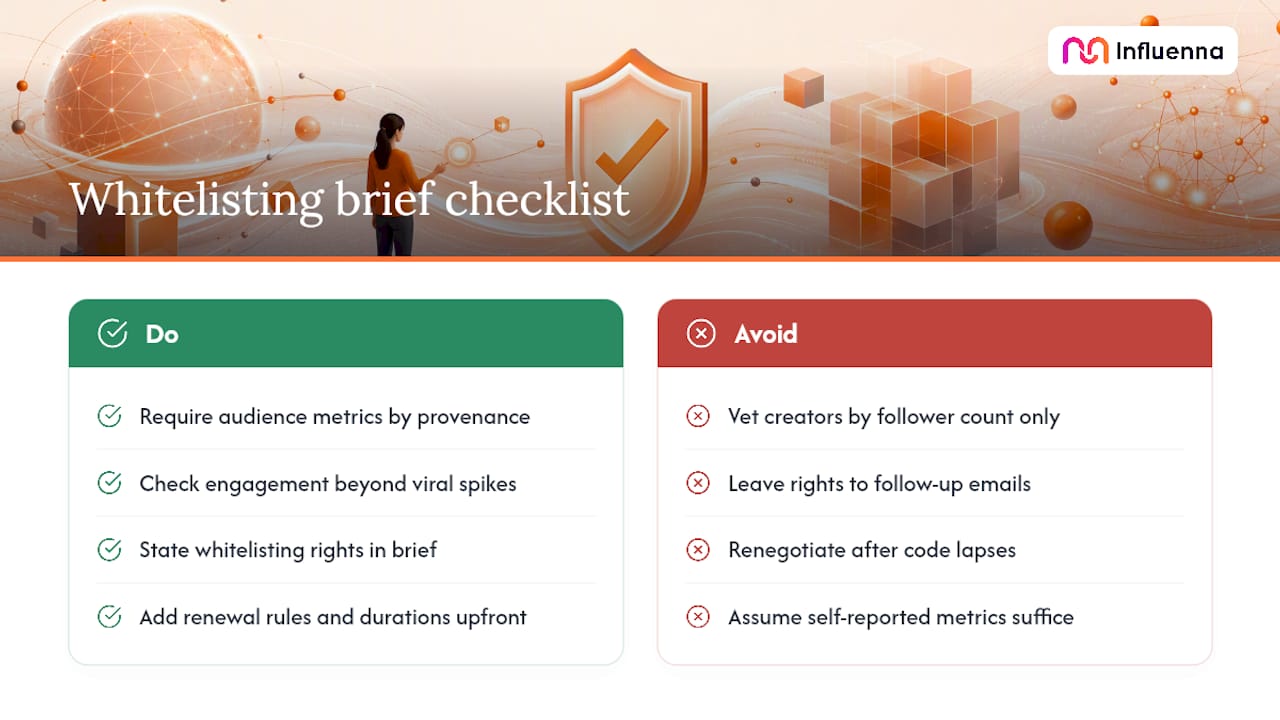
Most whitelisting problems trace back to the brief, not the platform. Vetting a creator on follower count alone misses the signals that actually predict a good whitelisting partner: audience metrics labeled by provenance (verified, estimated, or self-reported), engagement patterns that hold up outside viral spikes, and content that genuinely fits the brand's category.
Whitelisting rights belong in the initial brief, not a follow-up email after the creator has already agreed to a flat content fee. Adding renewal rules for authorization codes at that stage avoids the awkward renegotiation that happens when a code lapses mid-flight and the creator suddenly has leverage they didn't have on day one.
Structured requests that state rights, duration, and renewal terms upfront settle far more of this before contact details are even exchanged.
The Next Two Years of Whitelisting Will Reward Operational Discipline
Platforms keep tightening code renewal windows and transparency rules, which means whitelisting is shifting from a creative tactic to an operations problem. Brands treating whitelisting as the "next phase" of creator partnerships will win, but only the ones who build renewal tracking and disclosure checks into their actual workflow, not their contract's fine print. Expect more creators to price amplification rights separately from content fees, and hybrid whitelisting plus dark-post programs to become the default, not the exception.
— Igor
Find Vetted Creators Before You Negotiate Whitelisting Rights
Most whitelisting delays trace back to one problem: brands find a creator through a cold DM, agree on a flat content fee, and only discover later that ad amplification rights were never discussed. Influenna is built to fix that sequence. Because accounts are reviewed before joining, you're browsing a curated pool instead of guessing who's real. You send a structured collaboration request instead of a cold pitch, and that request can specify whitelisting rights, access duration, and renewal terms early in the negotiation.
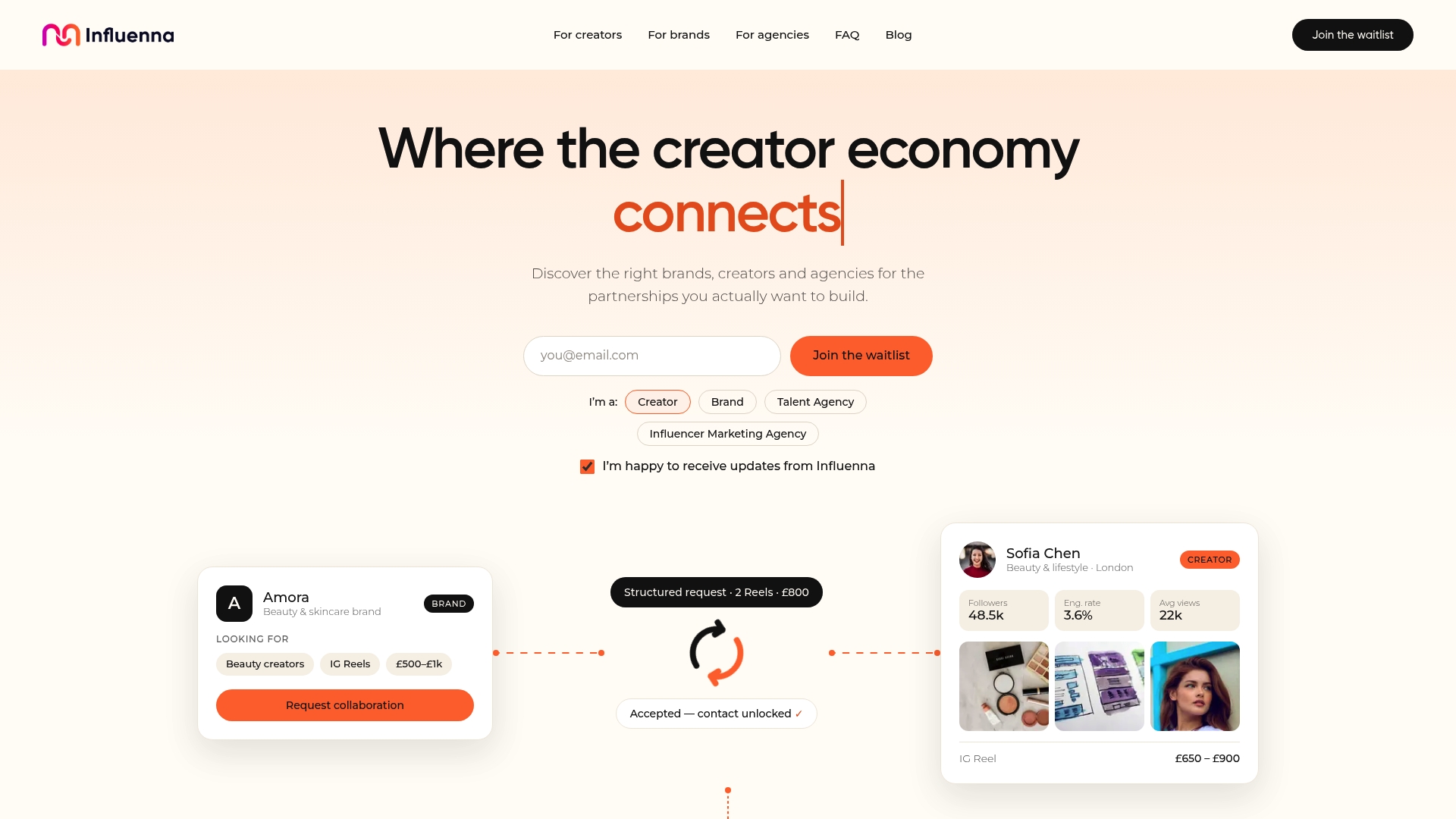
Contact details only unlock once both sides approve, so creators aren't fielding spam and brands aren't wasting outreach on partners who were never a fit. If you're planning a whitelisting campaign for 2026 and want the negotiation to start on the right terms, join the Influenna waitlist and get matched with partners who already expect these conversations.
Sources
For platform mechanics, check Storika's 2026 guide to whitelisted creator ads. For contract structure, see ContentGrip's whitelisting and dark posting guide, and for disclosure law, Cornell's Legal Information Institute.
- Sponsorship disclosure — Legal Information Institute (Cornell Law)
- Whitelisted Creator Ads in 2026: The Complete Guide to Spark Ads, Partnership Ads, and Creator Ad Permissions | Storika
- Whitelisting Vs Dark Posting in Influencer Marketing: Difference & Benefits — Searchlight Social
FAQ
How much do creators charge for whitelisting rights?
Pricing usually runs as a percentage uplift on top of the creator's base content fee rather than a flat rate, since the brand is paying for extended usage and ad reach, not just the original post. The exact markup depends on access duration, exclusivity terms, and whether dark-post flexibility is included, so standard payment clauses should spell out the basis before either side signs.
Is whitelisting the same as dark posting?
No. Whitelisting boosts a post that still shows up on the creator's public profile, while dark posting runs entirely as a paid unit that never appears on anyone's feed. Whitelisting and dark posting work well together rather than as substitutes, with whitelisting handling awareness and dark posting handling conversion testing.
What are Meta whitelist ads?
On Meta, whitelisting runs through Partnership Ads: the creator tags the brand as a partner, which lets the brand boost that specific post from Ads Manager using their own budget and targeting. As of 2026, these partnership ads now appear in Meta's Ad Library showing both the brand and creator identity.
Is whitelisting a good strategy for every brand?
It's a strong fit for top-of-funnel awareness and trust building, especially when entering a new market or audience segment, but the contract and code-management overhead can outweigh the benefit for very small budgets. Brands running a hybrid approach, whitelisting for reach and dark posting for conversion, tend to get the most out of both formats.
How do I find creators willing to grant whitelisting rights?
Look for creators whose audience metrics are clearly labeled by provenance and whose engagement holds up beyond one viral post, rather than relying on follower count alone. Platforms like Influenna let you send structured collaboration requests that state whitelisting terms upfront, so the negotiation starts aligned instead of getting renegotiated after the content is already produced.