Influencer Contract Basics: Key Clauses and Checklist
12 min read

An influencer contract is a written agreement that spells out what a creator will post, how much and when they'll get paid, who owns the content afterward, and how the deal ends if something goes wrong. It protects both sides: the brand gets deliverables it can enforce, and the creator gets a paper trail if payment stalls or a brand tries to reuse content it never licensed. Get five clauses right and most deals stay out of trouble: deliverables, payment terms, usage rights, disclosure compliance, and termination.
Everything else in a contract supports those five. Before signing anything, confirm the document covers:
- Exactly what gets posted, where, and by when
- How much you're paid, on what schedule, and what happens if payment is late
- Whether the brand gets a license to reuse content or full ownership
- Who's responsible for compliant disclosure language according to regulations
- How either side can exit, and what happens to payment and content rights if they do
Pro Tip: Send your own contract draft first instead of waiting for the brand's version. Whoever writes the first draft sets the default terms, and negotiating from your language is easier than trying to strike clauses from theirs.
Key Takeaways
A written influencer contract works because it locks down deliverables, payment, usage rights, disclosure responsibility, and termination before any content goes live.
| Point | Details |
|---|---|
| Five clauses matter most | Deliverables, payment, usage rights, disclosure, and termination decide whether a deal stays safe. |
| Specify usage duration | State a license length and channel scope rather than granting open-ended rights. |
| Cap payment windows | Use net 15 or net 30 with a late fee clause instead of relying on default statutory rates. |
| Scope exclusivity narrowly | Limit it to a category, duration, and territory, and compensate for it separately. |
| Start from structured terms | Influenna lets creators set rates upfront and matches through approved requests, so contracts start from agreed terms, not blind negotiation. |
Table of Contents
- Why You Need a Written Influencer Agreement
- The Core Clauses Every Influencer Contract Includes
- How to Lock Down Deliverables, Deadlines, and Approvals
- Structuring Payment Terms and Content Ownership
- Disclosure Rules, Exclusivity, and Conduct Clauses
- Termination, Liability, and Dispute Resolution
- Your Pre-Sign Checklist and the Red Flags to Reject
- Where to Find a Starter Template
- A Marketplace View on What Actually Reduces Contract Friction
- A Simpler Way to Start the Conversation
- Sources
- FAQ
Why You Need a Written Influencer Agreement
A verbal understanding or a string of Instagram DMs doesn't hold up when a brand claims you owed three more Reels, or a creator claims they were never paid for the second post. A written agreement fixes deliverables, payment, and usage rights in one place, so nobody's relying on memory.
You need one for paid posts, gifted product with any expectation of a post, ambassadorships, purchased UGC, and event activations. Brands get enforceable deliverables and clear usage rights; creators get guaranteed payment terms and limits on how their content and likeness get reused. Skip the contract and you're negotiating disputes after the damage is done, not before.
The Core Clauses Every Influencer Contract Includes
Most influencer agreements follow the same skeleton, whether it's a one-page gifting deal or a year-long ambassadorship:
- Parties and creator status (independent contractor, not employee)
- Scope and deliverables
- Timeline and content approval process
- Payment terms
- Usage rights and licensing
- Exclusivity
- Disclosure and compliance
- Intellectual property ownership
- Termination
- Indemnities, governing law, and dispute resolution
Usage rights, exclusivity, and payment timing cause the most back and forth, according to aggregate guidance from InfluencerFee's clause breakdown.
How to Lock Down Deliverables, Deadlines, and Approvals
Vague scope language is where most disputes start. "A few Instagram posts" means nothing to a court or an angry brand manager. Specify the platform, format, exact post count, minimum production specs, required hashtags, and any mandatory call-to-action language.
| Element | What to specify |
|---|---|
| Platform and format | Instagram Reel, TikTok video, YouTube integration, static post |
| Quantity and timing | Number of posts, draft due date, posting window |
| Content requirements | Captions, hashtags, tagging, disclosure placement |
| Approval process | Submission method, review period, number of revision rounds |
Set a firm draft deadline, a review period (48 to 72 hours is standard), and a cap on revision rounds, usually two. Define what "deemed approved" means: if the brand doesn't respond within the review window, the content is automatically cleared to post. Without that clause, brands can sit on approvals indefinitely while a campaign deadline quietly passes.
Pro Tip: Keep the main contract short and attach a production schedule or creative brief as a separate exhibit. That way you can adjust deliverables for a new campaign without renegotiating the whole agreement.
Structuring Payment Terms and Content Ownership
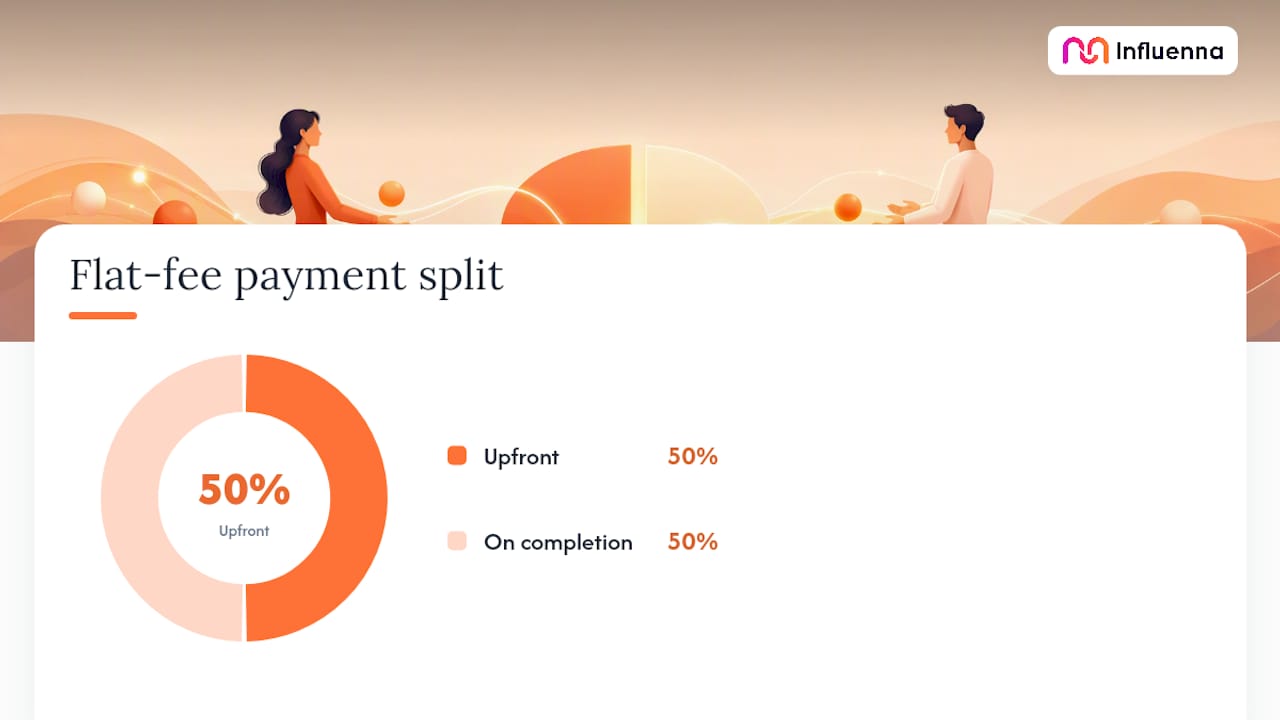
Payment usually follows one of four models: a flat fee per deliverable, a monthly retainer, milestone-based splits tied to posting dates, or a commission/affiliate structure. For most one-off campaigns, a flat fee with 50% upfront and 50% on completion gives creators cash flow protection and gives brands a reason to stay engaged through delivery.
Specify the invoice date, currency, payment method, and net payment window (net 15 or net 30, never net 90). Add a late fee clause. In the UK, creators already have a statutory right to claim interest of 8% above the Bank of England base rate on overdue invoices when a contract stays silent on the issue, per the Late Payment of Commercial Debts Act. A written late-fee clause is still better than relying on that default, because it removes any ambiguity about what triggers the charge.
License versus ownership is the other major fork:
- License grants the brand rights to use content for a defined period and set of channels (organic social only, or organic plus paid ads) while the creator retains ownership. Licenses often run for a defined period such as several months, covering specified uses with paid amplification priced separately.
- Assignment transfers full ownership to the brand, which usually commands a materially higher fee since the creator gives up future control entirely.
If a brand wants to run your content as a paid ad (whitelisting), that's a separate right with separate compensation. Don't let "usage rights" silently include paid media unless you've priced it that way.
Disclosure Rules, Exclusivity, and Conduct Clauses
Sponsored content has to be disclosed clearly, and the FTC's endorsement guidance makes both the brand and the creator responsible for getting it right. The FTC's plain-language influencer guide gives concrete examples: disclosure at the start of a caption (not buried under a wall of hashtags), platform-native branded content tags, and a spoken "this is a paid partnership" in video content where text alone won't be seen.
- Scope exclusivity narrowly: a specific product category, a defined duration (30 to 90 days post-campaign is common), and a defined geography, not an open-ended ban on all competing brands
- Compensate exclusivity separately from the base deliverable fee. It's a real restriction on the creator's income
- Draft morality/conduct clauses proportionally, tied to specific, defined conduct rather than vague "reputational harm"
Non-disclosure exposes both the brand and the influencer to FTC enforcement action, and a contract silent on who's responsible for compliance leaves that risk with whoever posts the content.
Termination, Liability, and Dispute Resolution
Build in two exit paths: termination for cause (breach, non-delivery, legal violation) with no notice required, and termination for convenience with a notice period, typically 15 to 30 days, that lets either side walk away without alleging fault.
- Cap liability at the total contract value rather than leaving it uncapped
- Use mutual indemnities, not one-sided ones that only protect the brand
- Define what happens to already-paid usage rights if the contract ends early
- Watch for one-way arbitration clauses that only bind the creator
Arbitration over litigation tends to be faster, less public, and easier on the working relationship, which is why KJK's contract guide recommends it for most influencer deals. The American Arbitration Association maintains rules and providers if you need a concrete arbitration framework to reference.
Pro Tip: Name a specific arbitration body and its rules in the contract itself. "Disputes will be arbitrated" without naming a provider just creates a second argument about which rules apply.
Your Pre-Sign Checklist and the Red Flags to Reject
Before signing anything, run through these in order:
- Deliverables specify platform, format, count, and deadline
- Payment terms name the amount, schedule, and a net window under 30 days
- Usage rights specify duration and channel scope rather than broad perpetual rights
- Disclosure responsibility is assigned to a specific party
- Exclusivity clauses limit to specific category, duration, and territory
- Approval process has a defined review window and revision cap
- Termination includes both for-cause and for-convenience paths
- IP and indemnity clauses are mutual, not one-sided
- Metrics/reporting requirements are clearly defined, not left open-ended
Watch for perpetual usage rights, unlimited revision rounds, one-sided indemnity, and net-90 payment terms. Each is fixable with a short counter: "Usage rights limited to 12 months, organic channels only." "Revisions capped at two rounds." "Indemnity mutual, capped at fees paid." If a brand wants a full production schedule, keep it as a separate exhibit listing shot list, posting dates, and required tags, so the core agreement stays reusable across campaigns.
Pro Tip: Keep a signed copy and a one-page deal summary for every collaboration. When a dispute comes up six months later, you want the specifics in front of you in thirty seconds, not buried in an email thread.
Where to Find a Starter Template
LegalTemplates covers the standard mid-market clause set, Juro works well when you want structured, searchable fields for tracking usage windows and exclusivity after signing, and a simple letter of intent is worth drafting first for larger ambassadorship deals before the full contract gets written. Match complexity to deal size: a one-pager for gifting, a full agreement for anything with real money attached. For six-figure or multi-year ambassadorships, get a lawyer to review before signing.
A Marketplace View on What Actually Reduces Contract Friction
Most contract disputes start before anyone opens a document, back when expectations were never written down in the first place. Structured collaboration requests that state rates and deliverables upfront cut that risk before negotiation even begins. A short deal summary attached to every creator profile scales far better than renegotiating boilerplate every time. Store signed copies and content archives somewhere both sides can find them later.
A Simpler Way to Start the Conversation
Most contract friction starts before anyone drafts a clause: a brand cold-DMs a creator, nobody states rates upfront, and both sides negotiate blind. Influenna structures that first step instead. Every account is reviewed before joining, creators set rates and preferences up front, and collaboration requests replace guesswork with specifics, so the contract that follows starts from agreed terms rather than an opening negotiation.
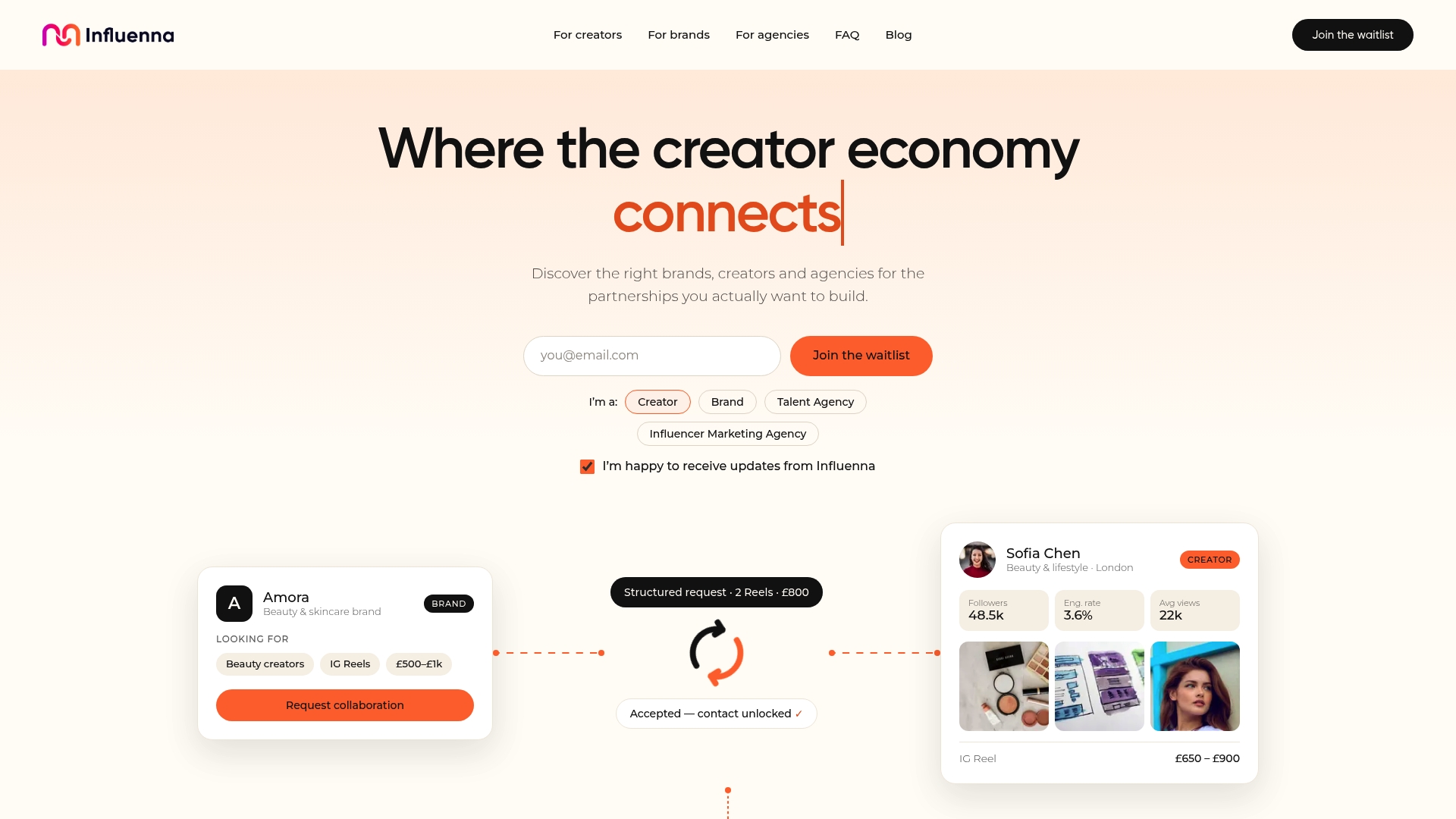
That matters most for brands managing multiple creator relationships and creators who want to stop chasing terms deal by deal. Contact details unlock only after both sides approve a request, so you're negotiating with someone who's already confirmed interest, not cold-pitching into the void. If you want your next influencer deal to start with clear terms instead of a blank inbox, join the Influenna waitlist and get matched through a structured request instead of a DM.
Sources
- FTC — Endorsements: what people are asking
- KJK — An Influencer’s Guide to Contracts: Key Terms you Can’t Ignore
- LegalLens — Influencer contract template UK
Consult the FTC pages for disclosure compliance questions, the law-firm guidance for clause drafting and dispute resolution, and the UK-specific resource if your deal involves a UK-based creator or brand.
FAQ
What Is an Influencer Contract?
It's a written agreement between a creator and a brand that defines deliverables, payment, content usage rights, disclosure responsibilities, and how the deal ends.
Do I Need a Contract for a Gifted Product Post?
Yes, if there's any expectation of a post in exchange for product. A short one-page agreement covering deliverables, usage rights, and disclosure is usually sufficient for small gifting deals.
Who Owns the Content After an Influencer Campaign?
It depends on the contract: a license lets the brand use content for a defined period and set of channels while the creator retains ownership, while an assignment transfers full ownership to the brand for a higher fee.
What Happens if a Brand Doesn't Disclose a Sponsored Post?
Both the brand and the creator can face FTC enforcement action, since FTC guidance holds both parties responsible for clear disclosure.
How Can I Avoid Cold Outreach When Negotiating Influencer Deals?
Platforms like Influenna let creators set rates and preferences upfront and match through structured collaboration requests, so negotiations start from agreed terms instead of a cold pitch.