Shoot Once, Cut Twice: YouTube vs TikTok for Marketers
18 min read

For short-term cultural reach and in-app commerce, TikTok wins. For searchable discovery and durable conversions, YouTube wins. If your team has the capacity, run both from one production system rather than picking a permanent winner, since the platforms serve different jobs in the marketing funnel. The trade-offs behind that split matter more than the headline, and that's what the rest of this comparison unpacks.
TL;DR:
- TikTok offers faster viral reach and lower production costs for quick testing, but its content lifespan is typically limited to days.
- YouTube supports long-form, searchable content that lasts and accumulates views over months, ideal for building durable assets.
- Match the platform to your marketing goal: use TikTok for in-app purchases and quick brand awareness, and YouTube for search-driven conversions and long-term engagement.
- Content repurposing can reduce costs by filming in both horizontal and vertical formats during a single shoot, avoiding platform-specific watermarks.
- Partner discovery and engagement are optimized through curated marketplaces that streamline creator outreach and ensure campaign fit, rather than relying solely on cold DMs.
Table of Contents
- YouTube vs. TikTok for Marketing: The Head-to-Head Breakdown
- Which Audiences Does Each Platform Actually Reach?
- How Long Do Shorts vs. TikTok Videos Actually Perform?
- How Do the Algorithms Decide What Gets Seen?
- Which Platform Pays Creators and Brands More?
- How Should You Measure ROI Across Both Platforms?
- What Does Production Actually Cost on Each Platform?
- How Do You Repurpose One Shoot for Both Platforms?
- What Creator-Discovery Benchmarks Should Marketers Expect?
- How Do Comments and Sharing Differ on Each Platform?
- What Brand Safety Rules Apply on Each Platform?
- How Do Trends and Virality Work Differently on Each Platform?
- Can You Connect These Platforms to Other Marketing Tools?
- A Simple Framework for Choosing Your Platform Mix
- Find TikTok and YouTube Creators Without the Cold DM Grind
- Sources
- FAQ
YouTube vs. TikTok for Marketing: The Head-to-Head Breakdown
Every axis in this comparison points to a different winner, which is exactly why "just pick one" advice tends to fail marketers.
Audience and reach. TikTok's For You Page rewards fresh accounts with real distribution on day one. YouTube requires more patience but rewards channels with compounding subscriber momentum over months.
Format and structure. TikTok favors native, unpolished vertical clips under 60 seconds. YouTube supports everything from 15-second Shorts to 40-minute deep dives, giving brands more format range within a single channel.
Algorithm behavior. TikTok's feed optimizes for completions and rewatches within a session. YouTube blends search relevance with watch time, which is why treating YouTube as an owned, searchable content library and TikTok as an attention-first reach amplifier is the framing Shopify's own analysis recommends to brands.
Monetization. YouTube's ad revenue share and membership tools favor creators building a long career. TikTok's Creator Rewards Program and TikTok Shop favor creators and brands moving product right now.
Advertising economics. TikTok ads generally run cheaper CPMs for top-of-funnel reach. YouTube ads, especially in-stream and CTV placements, cost more but attach to measurable search and conversion behavior.
Production demands. TikTok content can go from idea to publish in an hour. YouTube's better-performing videos usually need scripting, editing, and thumbnail design.
Quick reference by priority:
- Need viral reach fast? TikTok.
- Need searchable, evergreen assets? YouTube.
- Need in-app purchases? TikTok.
- Need measurable ROAS at scale? YouTube.
- Need low production cost? TikTok.
Which Audiences Does Each Platform Actually Reach?
TikTok skews younger and TikTok skews toward the "quick scroll" mode of attention. YouTube pulls a wider age range and captures more deliberate, search-driven intent.
Pew Research's data on teen platform habits shows stronger TikTok adoption among younger cohorts compared to older demographics, which matters if your buyer is Gen Z or young millennial. YouTube's audience spans teens through retirees, and its search function means viewers arrive already looking for a solution, not just killing time between classes.
That intent gap changes what "engagement" even means. TikTok users browse; YouTube users search. A cooking brand posting a 20-second recipe hack on TikTok is fighting for a thumb to stop scrolling. The same brand posting "how to make sourdough starter" on YouTube is answering a question someone typed into the search bar with buying intent already formed.
Here's how that plays out by business type:
- DTC brands selling impulse products (skincare, snacks, apparel): TikTok's browsing audience and native checkout favor quick, visual conversion.
- B2B companies selling considered purchases: YouTube's search intent and longer format let you actually explain the product.
- Niche verticals (woodworking, personal finance, medical devices): YouTube's searchability serves evergreen demand better than TikTok's trend cycle.
How Long Do Shorts vs. TikTok Videos Actually Perform?
TikTok clips typically run 15 to 60 seconds and burn through most of their views in the first 48-hours. YouTube videos, including Shorts, run longer on average and keep pulling views for weeks or months after publishing.
That gap in content lifespan is the single most underappreciated difference between these platforms. Industry data on engagement half-life shows YouTube content lasting roughly 10.6 days on average, while TikTok videos often decay close to zero within days. A TikTok video that doesn't catch algorithmic momentum in the first few hours essentially stops earning views. A YouTube video, by contrast, keeps collecting search traffic long after publish day.
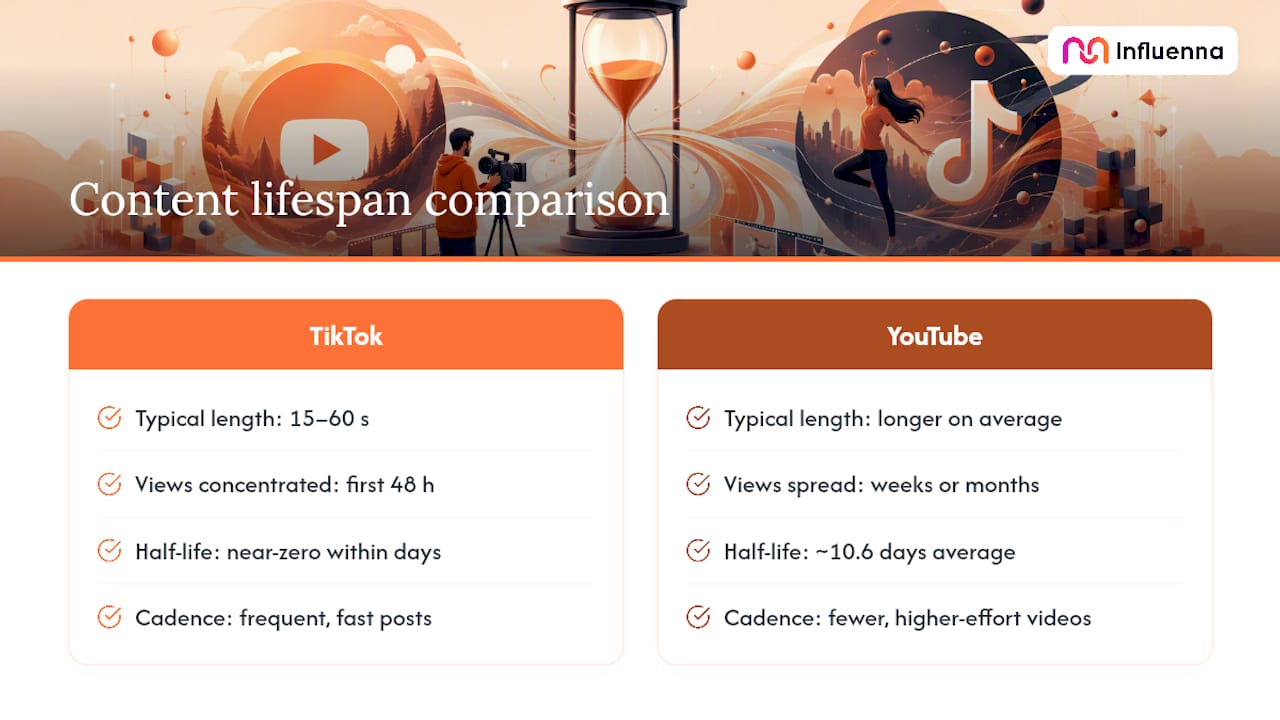
This changes how you should think about cadence. If you're chasing viral moments and cultural relevance, TikTok's speed rewards frequent posting and fast trend response. If you're building a searchable library that pays off for years, YouTube's slower burn rewards fewer, better videos over volume. Most brands need both: TikTok for testing hooks fast and cheap, YouTube for the videos worth the extra editing hours because they'll still be earning views next spring.
How Do the Algorithms Decide What Gets Seen?
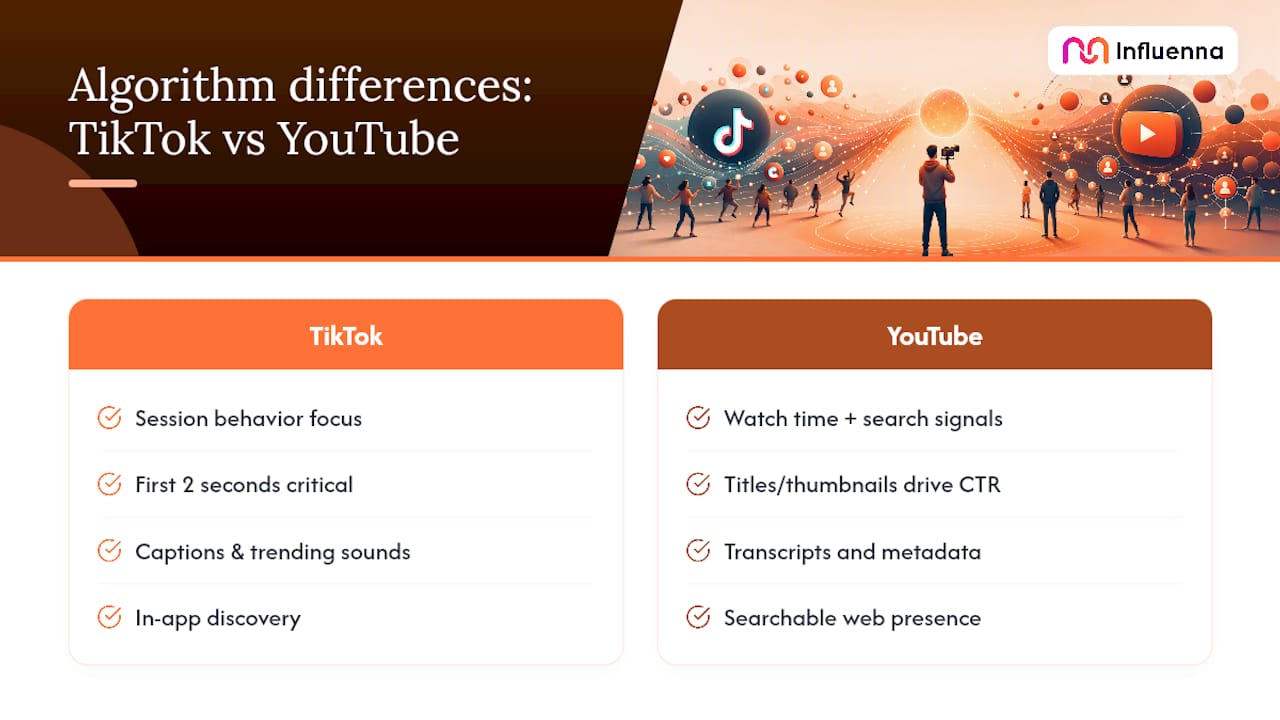
TikTok's feed cares almost entirely about session behavior: completions, rewatches, shares, and how fast someone scrolls away. YouTube blends that same watch time signal with something TikTok mostly lacks, actual search relevance.
That distinction drives two different optimization playbooks. On TikTok, your first two seconds decide everything, since the algorithm reads early drop off as a signal to stop showing your video. Captions, on-screen text, and trending sounds all help surfacing, and Hootsuite's guidance treats TikTok increasingly as a search and discovery engine in its own right for younger users who type queries directly into the app.
On YouTube, titles and thumbnails control click-through, but the video's actual content, transcript included, determines whether it shows up for relevant searches months later. Strong titles answer a real question. Thumbnails should promise a specific outcome, not just look flashy.
There's a quieter advantage to YouTube here too. Its content gets pulled into AI-powered search results and chat answers more often than TikTok's, largely because YouTube videos have transcripts, structured metadata, and a searchable web presence that TikTok's closed, feed-first format doesn't replicate. For brands trying to build a durable answer to their category's core questions, that citation advantage compounds over time in ways a viral TikTok moment never will. Improving YouTube watch time directly strengthens both search ranking and that AI-visibility effect.
Which Platform Pays Creators and Brands More?
YouTube's monetization runs through ad revenue share, channel memberships, and Super Chat, a model built for creators playing a long career game. TikTok's Creator Rewards Program pays per view within stricter eligibility rules, and its real economic engine is TikTok Shop, native commerce baked directly into the feed.
For brands, that split shows up in ad formats too. YouTube offers in-stream, in-feed, and increasingly CTV inventory, all trackable through Google's measurement stack. TikTok offers in-feed ads, Spark Ads boosting organic creator posts, and shoppable video that lets someone buy without leaving the app. Sprout Social's rundown of TikTok's business features highlights just how much of the platform's commerce muscle sits inside native checkout rather than outbound clicks.
The economic logic is simple once you see it: YouTube's model favors creators and brands optimizing for durable revenue and brand equity. TikTok's model favors brands optimizing for immediate purchase behavior, especially low-cost, high-frequency products. Neither is better, they're just solving different problems, and rate benchmarks for both platforms (see TikTok creator rates and YouTube sponsored video rates) reflect that gap directly.
How Should You Measure ROI Across Both Platforms?
Attribution on both platforms is messier than the dashboards suggest. Last-click models overcredit whichever platform a customer touched right before purchase, which usually flatters retargeting and undersells top-of-funnel discovery. Serious marketers lean on incrementality testing or marketing mix modeling instead of trusting in-platform conversion numbers alone.
Budget allocation should scale with spend level, not gut feeling. At smaller monthly budgets, lower CPMs and native commerce features make TikTok the more efficient starting point for testing creative fast without burning cash. At larger scale, YouTube's measurement rigor and CTV inventory usually justify shifting more dollars there, since the reporting infrastructure supports real attribution work.
Watch different primary metrics on each platform. On TikTok, track completion rate, shares, and Shop conversions weekly. On YouTube, track watch time, click-through rate, and search impressions on a monthly cadence, since search-driven traffic builds more slowly. A written influencer marketing budget framework helps translate these bands into actual dollar figures for your team's size.
What Does Production Actually Cost on Each Platform?
A polished YouTube video, scripted, shot, and edited, typically takes several days to over a week depending on complexity. A solid TikTok clip can go from idea to publish in under an hour, sometimes shot on a phone with no crew.
Small teams should staff for TikTok's speed first, since one person with a phone and decent editing app can sustain the cadence. Enterprise teams supporting both platforms usually need a dedicated editor splitting time between long-form YouTube cuts and rapid TikTok turnarounds. When calculating cost per durable asset, factor in shelf life: a YouTube video earning views for months has a lower true cost per view than its upfront production price suggests, while a TikTok clip's cost is mostly sunk the moment its 48 hour window closes.
How Do You Repurpose One Shoot for Both Platforms?
The efficient move is shooting once and cutting for each platform's actual job. A single production system built around this repurposing model cuts overhead while still respecting what each feed rewards.
- Shoot horizontal and vertical coverage in the same session.
- Cut a long-form YouTube version with a strong retention arc.
- Re-edit the best 30 to 60 seconds for TikTok with a faster hook.
- Swap audio choice, since trending sounds matter on TikTok but hurt searchability on YouTube.
- Publish the YouTube Shorts version separately from the TikTok cut, never as a reposted duplicate.
Pro Tip: Platforms detect and suppress content carrying a competitor's watermark. Always export a clean, watermark-free version for each platform rather than reposting a TikTok-branded clip onto YouTube Shorts.
What Creator-Discovery Benchmarks Should Marketers Expect?
Choosing the right platform is only half the job. Finding creators who can actually execute on either one is where most campaigns lose weeks.
Cold outreach through DMs routinely takes days to get a single reply, if it gets one at all, because creators have no context on budget, expectations, or legitimacy. A curated marketplace model replaces that guesswork with structured collaboration requests, where brands see a creator's platform focus and audience data before reaching out, and both sides approve before contact details unlock. That structure doesn't guarantee speed, but it removes the wasted cycles of chasing creators who were never a fit. Building a discovery strategy tied to actual campaign KPIs matters more than the platform choice itself once you're at the outreach stage.
How Do Comments and Sharing Differ on Each Platform?
TikTok's comment section functions almost like a second content layer. Top comments get pinned, replied to on video, and sometimes spawn entire follow-up posts, creating a loop where the audience shapes the content in near real time.
YouTube comments run slower and deeper. Viewers write paragraph-length reactions, ask specific questions about the video's subject matter, and creators who reply build a kind of community loyalty that shows up in subscriber retention rather than viral spread. Sharing behavior splits the same way: TikTok shares happen instantly, usually to a friend via direct message as a "you have to see this" reflex. YouTube shares tend to happen when someone finds a genuinely useful answer and sends the link to solve a specific problem, whether that's a repair tutorial or a product comparison.
For brands, this means TikTok engagement rewards a personality-driven, reactive presence, replying fast, riffing on trending sounds, treating the comment section as part of the show. YouTube engagement rewards depth, answering questions thoroughly in the video itself so comments become a secondary support channel rather than the main event. Community managers assigned to TikTok need to move fast and stay conversational. Those assigned to YouTube need to write more substantive replies less often.
What Brand Safety Rules Apply on Each Platform?
Both platforms enforce ad policies around misleading claims, restricted categories, and disclosure requirements for paid partnerships, but the practical risk profile differs.
TikTok's algorithm can push content to unpredictable audiences fast, which means a brand's organic post or a creator collaboration can land in front of unintended demographics before anyone catches a problem. Content moderation decisions also happen at massive scale and speed, so brand safety issues, when they occur, spread before a team can react. YouTube's slower distribution curve gives brands more room to catch issues before a video gains real reach, and its longer content history means a channel's track record is easier to audit before a partnership.
Disclosure rules apply on both platforms for sponsored content, and regulators in multiple countries require clear paid partnership labeling regardless of which app hosts the post. Brands working with creators should confirm disclosure compliance is part of the deliverable, not an afterthought handled loosely after publish. Vetting a creator's history for brand safety issues, not just follower count, matters more on TikTok given how fast a single controversial clip can resurface in someone's feed months later.
How Do Trends and Virality Work Differently on Each Platform?
TikTok trends move through sound and format first, content second. A single audio clip can spawn thousands of near-identical videos within days, and brands that jump on a trend early, before it saturates, capture disproportionate reach relative to production effort.
YouTube virality works differently, built more around topic timing and search demand than a shared audio trend. A video answering a question right as search interest spikes, a new product launch, a breaking news topic, a seasonal event, can ride that search wave for weeks rather than the 48 to 72 hour window a TikTok trend typically offers. This is part of why treating YouTube Shorts as a discovery layer that funnels viewers into long-form content works as a strategy: Shorts can catch some of TikTok's speed while still feeding YouTube's slower, more durable search engine.
The practical takeaway is that TikTok rewards reactive, fast-turnaround teams who can spot and execute on a trend within hours. YouTube rewards teams who track search demand and publish ahead of predictable spikes, treating trend response as a research problem rather than a speed contest.
Can You Connect These Platforms to Other Marketing Tools?
YouTube integrates natively with the broader Google ecosystem, Google Ads, Google Analytics, and Google Search Console all pull data that ties video performance to site traffic and conversion events. That connective tissue is a major reason YouTube supports more rigorous attribution modeling than TikTok currently can.
TikTok's integration options have expanded through its Pixel, API access for ad platforms, and partnerships with ecommerce tools for TikTok Shop syncing, but the ecosystem remains more closed than Google's. Marketers running TikTok Shop campaigns can sync inventory and track in-app purchases, but cross-platform attribution back to email or paid search still requires third-party tools like a CDP or an analytics layer sitting outside TikTok itself.
For teams running both platforms, the practical fix is standardizing UTM parameters and using a shared analytics dashboard rather than relying on either platform's native reporting as the single source of truth. A partner tool like Get Reward QR can help bridge that gap for brands using TikTok's native commerce alongside offline or QR-driven promotions, turning an in-feed moment into a trackable, attributable action rather than a black box view count.
A Simple Framework for Choosing Your Platform Mix
Define the job first: awareness, discovery, or conversion. Match that job to the platform built for it, then run a 30 to 90 day test before committing real budget. DTC impulse brands often split spend toward TikTok; B2B education-led funnels lean YouTube; mixed-objective brands run both from one shoot.
Getting stakeholder buy-in gets easier once you frame it this way, since nobody's arguing over which platform is "better" anymore, just which job needs doing this quarter.
— Igor
Find TikTok and YouTube Creators Without the Cold DM Grind
A curated alternative to cold outreach provides brands a way to build creator partnerships across TikTok and YouTube. Accounts are reviewed before joining, allowing browsing of real creators and agencies instead of guessing whether a DM will get opened.
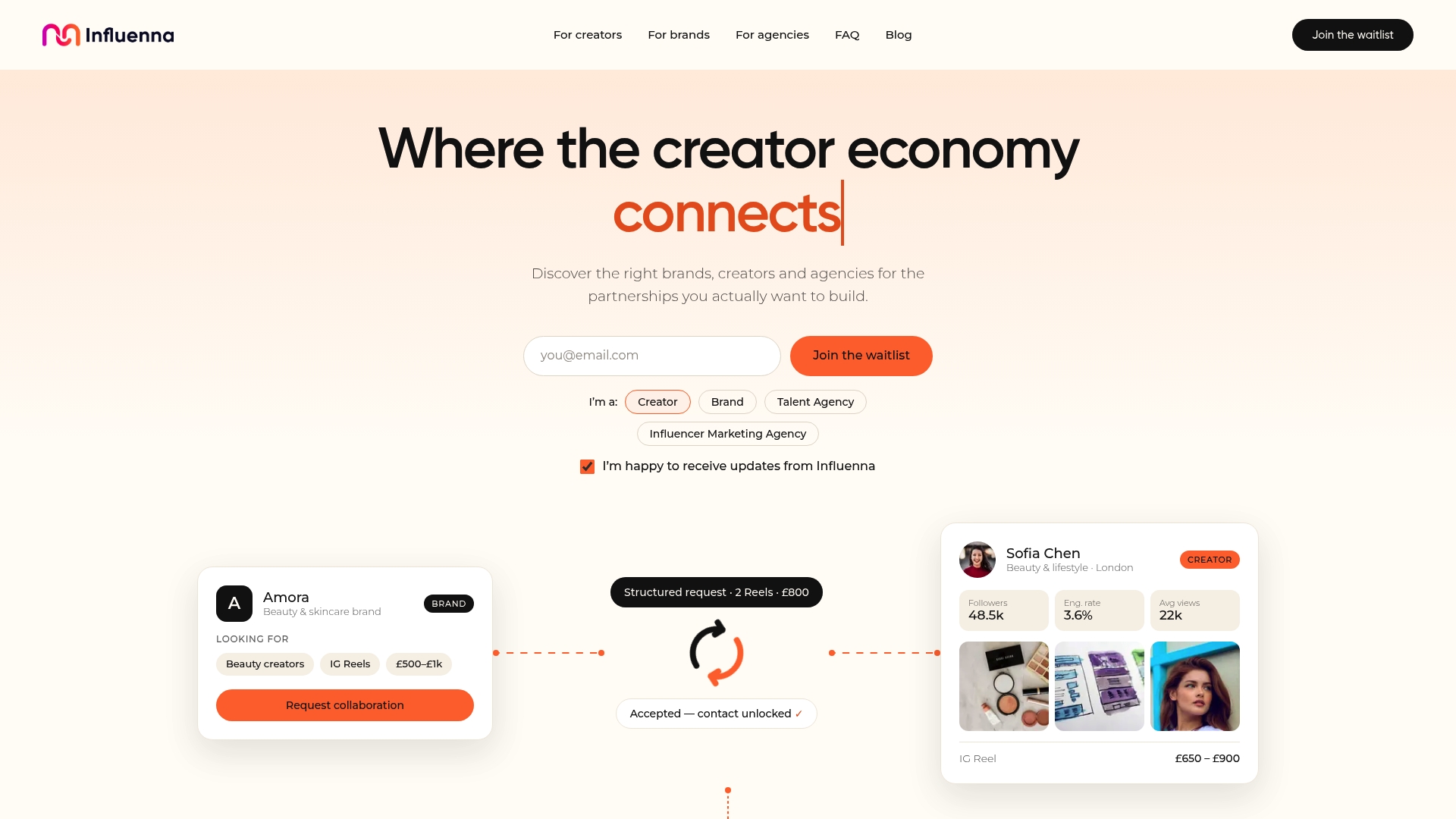
Once you know which platform fits your marketing job, whether that's TikTok's fast reach or YouTube's searchable long game, the next problem is finding creators who actually fit that lane. Instead of cold-messaging strangers and hoping for a reply, you search and filter for the right partner, send a structured collaboration request with your actual expectations attached, and exchange contact details only once both sides say yes. Talent agencies and influencer marketing agencies can run this process across their rosters or client lists from a single account, which helps reduce the spreadsheet chaos common in campaign planning. A tool like the influencer brief template pairs well here, giving you a clean starting point for the request itself.
Influenna is currently pre-launch, and the public site is a waitlist. If you're planning creator partnerships for either platform, join the waitlist at Influenna to get access once the marketplace opens.
Sources
- TikTok vs YouTube: Which platform to prioritize for video marketing (Shopify)
- YouTube vs. TikTok: Where to invest your video budget (vidIQ)
- TikTok marketing guide (Hootsuite)
FAQ
Which Platform Is More Profitable, YouTube or TikTok?
It depends on what you're monetizing. YouTube generally pays creators more per view through its ad revenue share and tends to build more durable brand equity over time, while TikTok's Creator Rewards Program and TikTok Shop favor brands optimizing for fast, in-app purchases rather than long-term ad revenue.
How Many Views Do You Need to Make $10,000 a Month on YouTube?
There's no fixed view count, since YouTube ad revenue depends heavily on niche, audience location, and ad rates for that content category. Most calculations require several hundred thousand to over a million monthly views depending on those factors, with finance and business channels typically earning more per view than entertainment content.
Does TikTok Pay $1 per 1,000 Views?
No, TikTok's Creator Rewards Program pays a variable rate per view that is generally quite low for most creators, and payout depends on factors like video length, engagement, and audience region. TikTok Shop commissions and brand deals usually generate far more income than the Creator Rewards Program itself.
How Many Views on YouTube Do You Need to Make $2,000 a Month?
Reaching a substantial monthly income from ad revenue alone typically requires a high volume of monthly views, depending on niche and ad rates. Many creators reach that income level faster through sponsorships and brand deals than through ad revenue alone, which is where benchmarks like YouTube sponsored video rates become useful for planning.
Should a Small Brand Choose TikTok or YouTube First?
Small brands testing creative on a limited budget often start with TikTok because of lower production costs and cheaper CPMs for early reach. Once messaging is validated, many shift a portion of that budget toward YouTube to build a searchable asset library that keeps generating views long after the campaign ends.