SMBs: Micro Influencer Benefits That Drive 46% Higher Affiliate Sales
12 min read

Micro-influencers deliver higher engagement, stronger audience trust, and sharper niche targeting than bigger creators, usually at a fraction of the cost. For brands testing new products or working with tight budgets, that combination tends to beat mass reach. HubSpot puts the typical range at 10,000 to 100,000 followers, a sweet spot where scale and authenticity coexist.
TL;DR:
- Micro-influencers with 10,000 to 100,000 followers typically generate up to 60% higher engagement rates than larger creators, driven by stronger parasocial bonds.
- They reach more pre-qualified, niche audiences, which often convert at higher rates than broad, mass-market campaigns.
- Budget-wise, the cost per partnership is lower, allowing brands to run multiple campaigns simultaneously and test different messaging strategies efficiently.
- Authentic, user-generated content from micro-influencers often outperforms brand-produced ads when shared across multiple platforms.
- Effective programs rely on clear briefs, careful vetting of engagement quality, and precise tracking via affiliate links, promo codes, and UTMs for measurable ROI.
Table of Contents
- The Core Benefits of Micro-Influencers at a Glance
- Why Smaller Audiences Interact More
- Finding Pre-Qualified Buyers Through Niche Reach
- Budgets, Pricing Shapes, and Scaling Across Creators
- Why Creator-First Content Outperforms Brand-Made Ads
- Tracking Conversions and Proving ROI
- How to Run a Micro-Influencer Campaign That Actually Works
- Common Pitfalls That Undermine Micro-Influencer Campaigns
- What Actually Separates Good Micro-Influencer Programs From Mediocre Ones
- A Simpler Way to Find the Right Micro-Influencers
- Sources
- FAQ
The Core Benefits of Micro-Influencers at a Glance
Marketers juggling a dozen priorities need the short version before the long one. Here's what a well-run micro-influencer program tends to deliver:
- Higher engagement rates. Smaller creators often generate significantly more interaction per follower than celebrity accounts.
- Authenticity and trust. Followers see these creators as peers, not billboards, so recommendations land differently.
- Niche targeting. A fitness or skincare micro-creator's audience is already interested in that category, not just scrolling past it.
- Lower cost per partnership. Budgets that fund one macro deal can fund a dozen micro ones.
- Usable content. Posts double as UGC for ads, product pages, and email once usage rights are cleared.
- Scalability. Running several small partnerships at once lets you test messaging across audiences simultaneously.
- Measurable performance. Affiliate links, promo codes, and UTMs make attribution far more concrete than a billboard or a magazine ad ever could.
Each of these matters because they solve a different problem: engagement proves people are paying attention, trust proves they'll act on it, and measurement proves it was worth the spend.
Why Smaller Audiences Interact More
Micro-influencers frequently see engagement rates that outperform larger creators by a wide margin. Sprout Social's research points to gains of up to 60% higher engagement compared with bigger influencer tiers, a pattern consistent enough that most media buyers now build it into their planning assumptions.
The reason traces back to psychology, not algorithm luck. Followers of smaller creators tend to form what researchers call parasocial relationships. They treat the person on their screen more like a friend giving advice than a celebrity running an ad campaign. A peer-reviewed study in the Journal of Business Research links this perceived closeness and opinion leadership directly to higher intent to act on a recommendation. That closeness erodes fast once a creator starts sounding scripted, which is why Shopify's guidance urges brands to protect a creator's natural voice rather than handing them brand copy to read.
For evaluation, skip vanity likes. Comments, saves, shares, and direct replies to a post signal real attention. A creator with 20,000 followers and a thread of genuine questions in the comments is worth more than one with 200,000 followers and a wall of emoji.
Finding Pre-Qualified Buyers Through Niche Reach
Micro-influencers don't just reach people, they reach the right people. A hiking gear brand working with a backpacking-focused creator isn't buying impressions, it's buying an audience that already owns trekking poles and reads gear reviews for fun. Beauty, fitness, parenting, and hobbyist communities (woodworking, home coffee brewing, tabletop gaming) all show this pattern: smaller, denser audiences convert at rates broad reach rarely matches.
Mapping a creator's niche to your buyer persona is a short exercise, not a research project:
- Pull the creator's top 20 posts and note recurring themes and vocabulary.
- Check who's commenting, not just who's following. Audience quality matters more than audience size.
- Compare the creator's content tone to your brand's actual customer, not your aspirational one.
Niche reach wins when you're selling something specific: a new product line, a category few people understand yet, or a higher-priced item that needs trust before purchase. Mass awareness still has its place for brand launches at scale, but for targeted conversion, niche beats broad almost every time.
Budgets, Pricing Shapes, and Scaling Across Creators
Compensation for micro-influencers usually falls into three shapes: product barter for smaller accounts, flat fees for posts, and commission-based deals tied to sales. HubSpot's benchmarks put typical flat-fee posts between $100 and $1,000, with video, exclusivity clauses, and usage rights pushing that number higher. A static photo costs less than a 60-second video review, and a creator who agrees to let you run their content as a paid ad will charge more than one whose content stays organic.
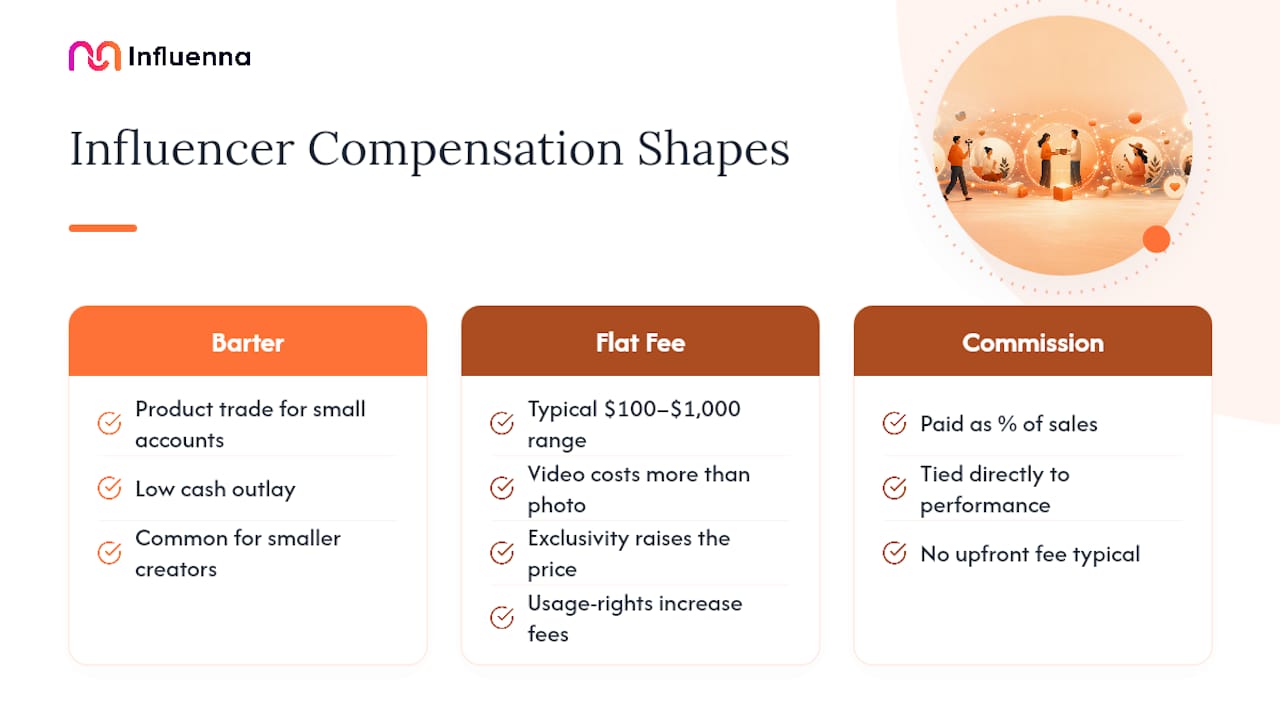
The real advantage shows up in volume. The budget that funds one macro influencer post can often fund multiple micro partnerships, which means you can A/B test messaging, creative styles, and audiences at the same total spend. If you plan to reuse content in paid ads or whitelist a creator's handle to run ads directly from their account, expect a significant premium above the base rate.
Why Creator-First Content Outperforms Brand-Made Ads
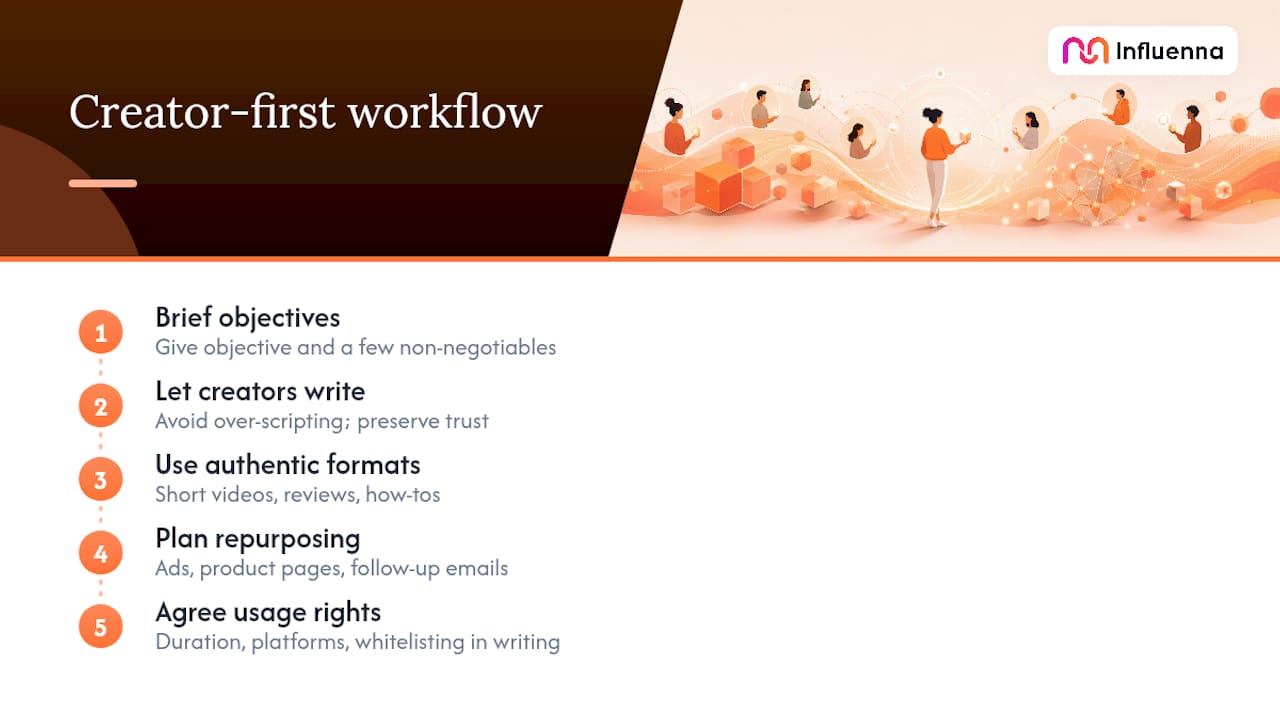
The content itself is often the underrated benefit. Give a creator your objective and a few non-negotiables, then let them write it in their own words. Over-scripting is the fastest way to kill the exact trust that made the partnership worth pursuing in the first place.
Micro-influencers tend to excel at short-form video, honest product reviews, and how-to content that shows a product in real use rather than a studio shot, making personal branding photography for creatives a valuable reference for capturing authentic creator content. Shopify notes that this blend of UGC-style authenticity and professional-enough production quality can outperform brand-originated social ads once it's licensed for reuse. That's where repurposing pays off: pull the strongest clips into paid ads, drop testimonial-style shots on product pages, or feature a review in a follow-up email.
Before launch, settle usage rights in writing: how long you can use the content, which platforms it can run on, and whether whitelisting (running ads from the creator's own account) is included. A creator brief template makes this easier to standardize across every partnership instead of renegotiating terms each time.
Tracking Conversions and Proving ROI
Attribution is where most micro-influencer programs either earn their budget or lose it next quarter. Unique affiliate links, promo codes per creator, and campaign-specific UTMs let you trace a sale back to the exact post that drove it, instead of guessing from a vague bump in traffic.
The upside is measurable. impact.com reports that brands combining affiliate strategies with influencer partnerships see 46% higher affiliate-based sales, and cites OLIPOP as an example where micro-creator activity produced strong, trackable returns. Separately, the American Marketing Association finds that smaller-following creators are often more cost-effective, with ROI that can exceed other digital channels when the program is structured properly from the start.
A simple incrementality test works well here: run the same offer through two or three creators with different-sized audiences, hold the creative format constant, and compare cost per acquisition across each. Report engagement rate, click-through rate, and cost per conversion to stakeholders, not just follower counts. A reporting template keeps that comparison consistent as the program grows.
How to Run a Micro-Influencer Campaign That Actually Works
A good campaign starts with a tight brief, not a long one. Keep it to one page:
- Objective — awareness, conversion, or content for repurposing.
- Audience — who the creator needs to reach and why they fit.
- Non-negotiables — disclosure requirements, brand mentions, anything legally required.
- Deliverables — post count, format, platform.
- Timeline — posting window and any embargo dates.
- Reporting — what data the creator sends back and by when.
Selection matters more than follower count ever will. Look at audience overlap with your actual customer base, engagement quality (real comments, not bot replies), content style fit, and a track record of clear sponsorship disclosure.
Scale gradually: pilot with 8 to 12 creators across a few niches, measure performance side by side, then reinvest in whoever performed best rather than locking into one partner too early.
Pro Tip: Run your pilot with identical UTMs and unique codes across every creator for three weeks before committing a larger budget. You'll see which niches convert, not just which creators post the nicest photos.
Common Pitfalls That Undermine Micro-Influencer Campaigns
Over-scripting is the most common mistake, and it's the one that does the most damage. When a creator's post reads like ad copy, followers notice, and the trust that justified the partnership evaporates.
Chasing follower count instead of engagement quality is a close second. A creator with a large but disengaged or bot-inflated audience will underperform a smaller, active one every time. Before signing anything, audit engagement patterns for suspicious spikes and check that the creator has a consistent history of disclosing paid partnerships. And lock in usage rights and tracking links before launch, not after the first post goes live; retrofitting attribution after the fact rarely works cleanly.
What Actually Separates Good Micro-Influencer Programs From Mediocre Ones
Follower count is the easiest thing to measure and the least useful thing to optimize for. What actually predicts a good partnership is whether a creator's community would trust their opinion on your specific product category, and that's a judgment call no spreadsheet filter makes for you.
The bigger operational problem isn't finding creators, it's the friction around vetting and reaching them. Cold outreach wastes time on both sides: brands guess at rates and fit, creators wade through DMs that go nowhere. A curated marketplace where every account is reviewed before joining, and where requests are structured instead of cold pitches, cuts a lot of that waste out. It doesn't replace judgment about creative fit, but it removes the guesswork about who's real and who's serious.
— Igor
A Simpler Way to Find the Right Micro-Influencers
Everything above depends on finding creators who genuinely fit your niche, not just ones who show up first in a hashtag search. There are curated marketplaces where creators, brands, talent agencies, and influencer marketing agencies are reviewed before they get access. Instead of cold DMs, users send structured collaboration requests with rates, goals, and preferences laid out, and contact details unlock only once both sides say yes.
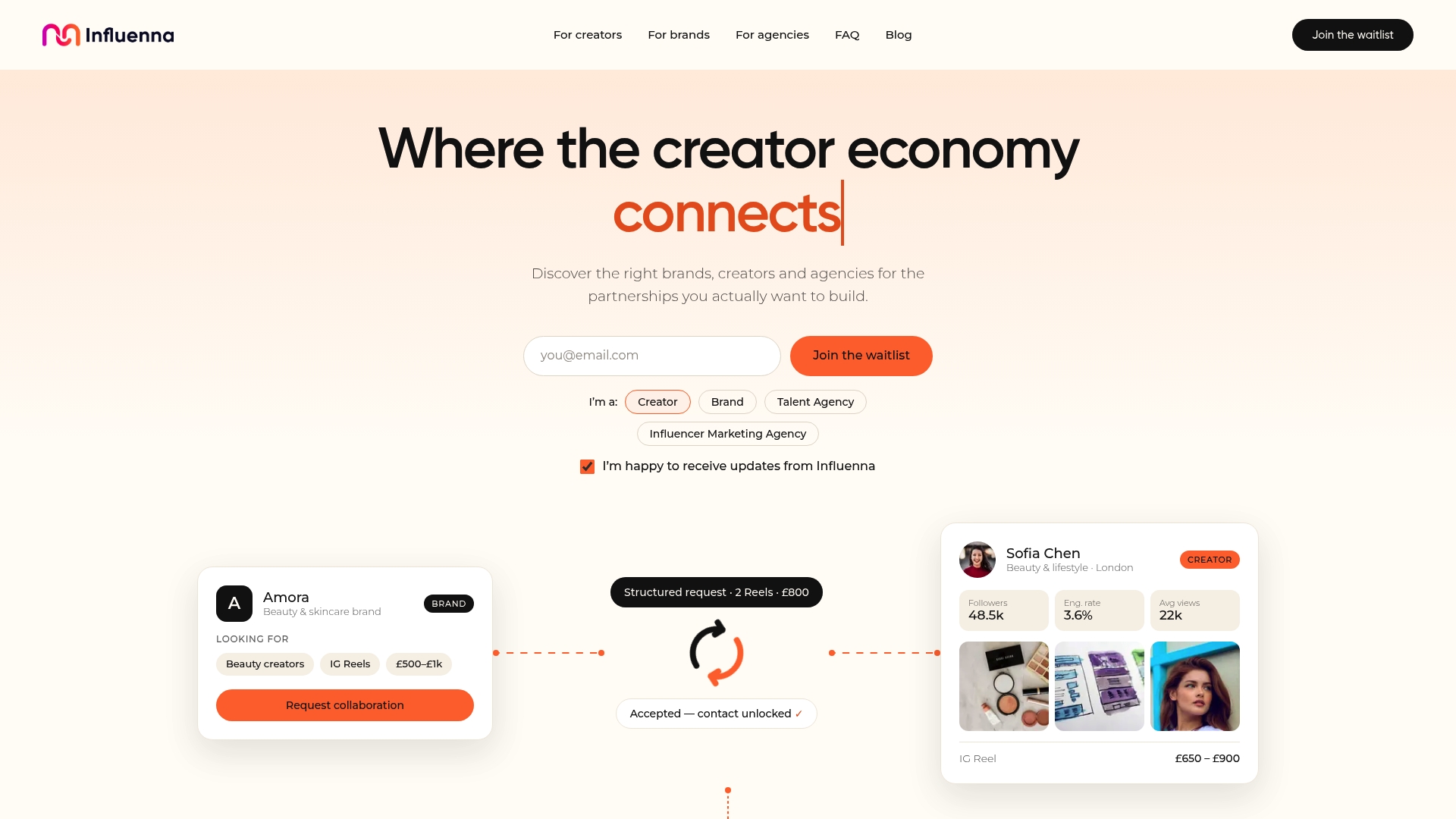
A few concrete next steps:
- Join the Influenna waitlist to get marketplace access as it opens.
- Grab the one-page brief template so your first outreach request is ready to send.
- Read the micro vs. macro influencer guide if you're still weighing which creator tier fits your budget.
Influenna doesn't manage the collaboration or take a cut once it's made. It just gets you to the right introduction faster than a spreadsheet of cold contacts ever could.
Sources
- Micro Influencers in 2026: Playbook for Cost, Compliance, and Conversion - Shopify
- My Comprehensive Guide to Micro-Influencer Marketing (HubSpot)
- AMA: influencer marketing ROI research
FAQ
How many followers do you need to be a micro-influencer?
Most industry guides, including HubSpot, place micro-influencers between 10,000 and 100,000 followers, a sweet spot where scale and authenticity coexist.
Is 100,000 followers a micro-influencer?
It sits at the upper edge of most definitions. Some frameworks classify 100,000 as the ceiling for micro, while others already treat it as the entry point for mid-tier or macro creators, so context and engagement quality matter more than the raw number.
What brands pay micro-influencers?
Brands across beauty, fitness, food, home goods, and tech regularly work with micro-influencers because niche audiences convert well for specific products. Compensation ranges from product barter for smaller accounts to paid posts and commission-based deals for established creators.
How much do you pay a micro-influencer?
Flat-fee posts typically run $100 to $1,000 depending on format, platform, and whether usage rights or whitelisting are included. Video content and exclusivity clauses usually push rates toward the higher end of that range.
How do micro-influencers compare to nano and macro influencers?
Nano influencers (roughly under 10,000 followers) offer even tighter community trust but far less reach, while macro influencers (over 100,000) trade some engagement rate for broader visibility. Micro-influencers sit in the middle, balancing meaningful reach with the engagement and trust levels nano creators are known for.