From $25 to Six Figures: What Brands Should Budget Per Post in 2026
17 min read

Expect to pay varying rates per post depending on the creator's tier, with nano creators charging on the lower end, and macro and mega talent charging significantly more; Instagram and YouTube usually command the highest premiums, while TikTok rates often run lower relative to views. Before you sign anything, run the quoted number through the engagement or CPM formula below to see if it actually holds up.
TL;DR:
- Influencer rates vary significantly by creator tier, platform, and deliverable type; tier benchmarks range from $25 for nano creators to six figures for mega influencers.
- Instagram and YouTube generally command higher prices due to content quality and engagement, while TikTok rates depend heavily on view counts rather than followers.
- Engagement rate is the primary factor influencing rates beyond platform and tier, with smaller accounts often outperforming larger ones in trust and conversion.
- Calculating a fair rate involves engagement models, CPM estimates, and considering usage rights, exclusivity, and production complexity.
- Negotiations benefit from upfront clarity on deliverables, usage scope, and budget, with structured proposals speeding up dealmaking.
Table of Contents
- What Do Influencer Rates Look Like by Tier and Platform?
- Why Do Two Creators With the Same Followers Charge Differently?
- How Do You Calculate a Fair Influencer Rate?
- How Should You Budget and Negotiate Influencer Deals?
- What Does the Math Look Like on a Real Campaign?
- Where Do These Rate Benchmarks Actually Come From?
- Which Contract Terms Change the Price the Most?
- Why Transparent Rate Benchmarking Actually Speeds Up Deals
- Skip the Cold Outreach and Find Creators Who Already Match Your Budget
- Sources
- FAQ
What Do Influencer Rates Look Like by Tier and Platform?
The follower count on a creator's profile tells you almost nothing about what they should charge. What matters is the tier, the platform, and the deliverable, and those three variables interact in ways that surprise a lot of marketers who are used to buying media on a simple CPM basis.
Industry benchmarking puts nano creators (1,000 to 10,000 followers) at $25 to $300 per post, micro creators (10,000 to 50,000) at $200 to $2,500, mid-tier creators (50,000 to 500,000) at $1,600 to $10,000, macro creators (500,000 to 1 million) at $5,000 to $25,000, and mega creators or celebrities well above $10,000, sometimes into six figures for a single post, according to Shopify's 2026 pricing breakdown. Those are starting anchors, not fixed prices. A creator with 40,000 followers and a disengaged audience can charge less than a creator with 15,000 followers who convert.
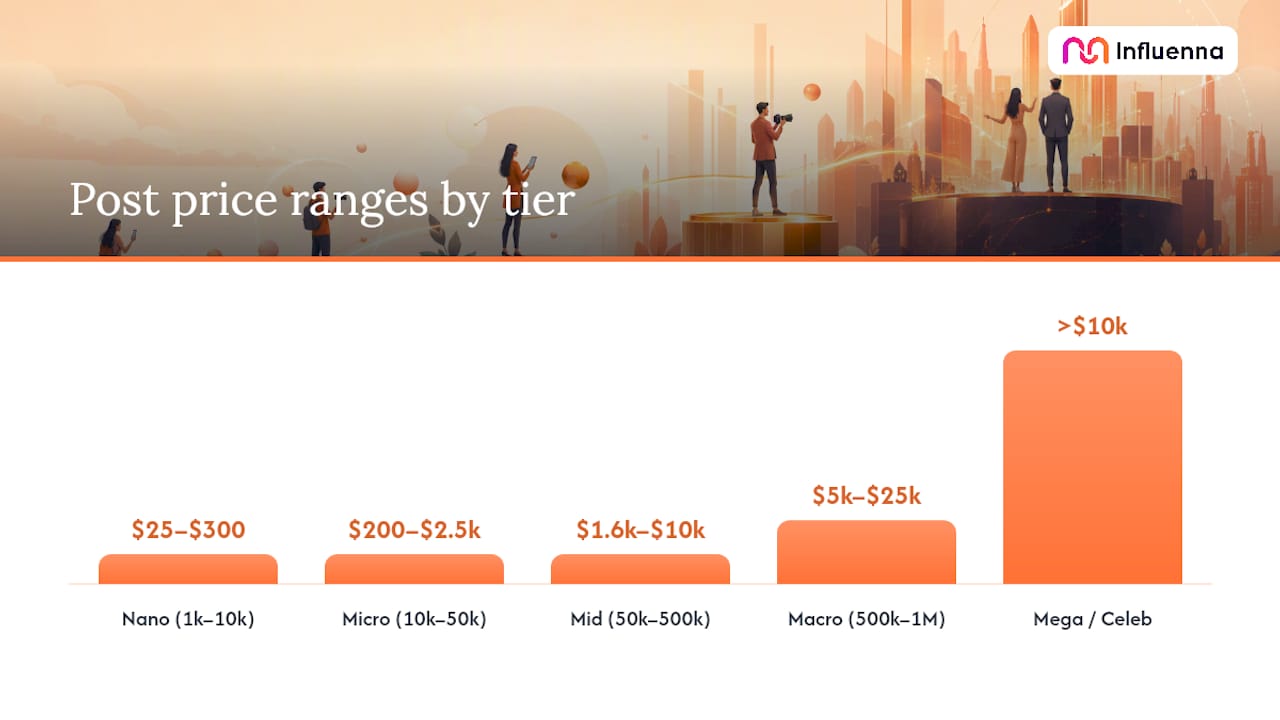
Platform changes the math substantially. Instagram tends to command a premium because of its visual product discovery function and its dominance in shopping behavior. YouTube long-form content usually costs more per post than any other format because production time is longer: scripting, filming, and editing a 10 minute video is a different job than shooting a Reel. TikTok rates, meanwhile, often track average view count more closely than follower count, which means a TikTok creator with a smaller following but consistently high view rates can out-earn a much larger, less-watched account, per AMT's platform rate breakdown.
Deliverable type shifts the number again within the same platform:
-
Short-form video (Reels, TikToks) usually commands a premium over static feed posts because it requires more editing time and tends to drive stronger engagement.
-
Instagram Stories are typically priced at a discount to a feed post, often 25% to 50% lower, since they disappear in 24 hours and carry less algorithmic weight.
-
Long-form YouTube integrations carry the highest per-piece cost of any format, reflecting scripting, filming, and editing hours.
-
Carousel posts on Instagram often price slightly above a single static image because they involve more creative assets and tend to hold engagement longer.
The typical rates per post vary by platform and creator tier, with lower rates for nano influencers and higher rates for mega influencers; Instagram and YouTube generally have higher rates compared to TikTok and Facebook/X, reflecting content type and platform maturity.
Pro Tip: Ask for a creator's average view count over their last 10 posts, not their follower total. Follower counts are static and easy to inflate; average views move with actual audience behavior and are much harder to fake.
Niche matters too. Finance, B2B tech, and health creators routinely charge above these ranges because their audiences are smaller but wealthier or harder to reach through other channels. Fashion and beauty niches, which have the most creator supply, tend to sit at the lower end of each band because competition keeps rates compressed. Geography compounds all of this: a U.S.-based creator with the same engagement rate as one in Southeast Asia or Eastern Europe will often charge two to four times more, purely because of local purchasing power and cost of living where the creator is based.
Why Do Two Creators With the Same Followers Charge Differently?
Engagement rate is the single biggest price driver after platform and tier, and it varies more than most brands assume. Nano and micro accounts often post engagement rates of 5% to 8%, while mega accounts frequently dip below 1% to 2%, a dynamic Harvard Business Review points to as a reason smaller creators can outperform bigger names on campaigns built around trust or conversion, not just reach. A creator quoting a rate well above the benchmark should be able to back it up with an engagement rate above their tier's typical range.
A handful of other factors explain the rest of the spread:
- Audience relevance and purchasing power. A niche creator whose followers are actively shopping in your category commands a premium over a general lifestyle account with a bigger, less targeted audience.
- Production complexity. A single static photo costs less than a scripted, multi-scene video with voiceover, props, or a second location.
- Usage rights and exclusivity. Paying for the right to run a creator's content as a paid ad, or asking them not to work with competitors for a set window, adds cost on top of the base organic rate.
- Campaign scope and timing. A single post costs less per unit than a bundled series, but a rush request with a 48 hour turnaround almost always triggers a rush fee.
- Platform metric differences. A creator's follower count and average view count can differ wildly, especially on TikTok, so pricing off the wrong number leads to bad comparisons across candidates.
- Agency representation. Creators with talent agencies or managers often quote 10% to 20% higher than the same creator would quote independently, since the agency is taking a cut.
Before you agree to a number, ask for screenshots of the last 30 days of insights (reach, impressions, engagement rate, audience demographics) directly from the platform's native analytics. A rate card alone tells you what someone wants to charge, not what their audience actually does.
How Do You Calculate a Fair Influencer Rate?
The main formulas to estimate fair influencer rates are engagement-based models for feed and Reel content, and CPM/CPV-based models for view-driven platforms like TikTok and YouTube Shorts; using both helps evaluate quoted rates effectively.
- Engagement-based formula. Multiply the creator's follower count by their engagement rate, then multiply that number by a cents-per-engagement rate, typically $0.10 to $0.30 depending on niche, a method outlined in Shopify's influencer pricing guide. Example: a creator with 40,000 followers and a 5% engagement rate generates roughly 2,000 engagements per post. At $0.20 per engagement, that's a fair rate of about $400 per post.
- CPM-based formula. Another method divides the proposed rate by expected views and multiplies by 1,000 to find the cost per thousand views (CPM); for instance, a TikTok creator averaging 50,000 views quoting $500 has an effective CPM around $10, consistent with common mid-range rates.
- Hybrid model. Pay a lower flat fee plus a performance bonus tied to clicks, code redemptions, or conversions. This works best for creators you're testing for the first time, since it caps your downside while still rewarding results.
- Cross-channel conversion. To compare a $1,200 Instagram Reel quote against a $600 YouTube Short quote, convert both to CPV or CPM using their respective view counts. The platform with the lower CPM is the better value, even if its sticker price is higher.
| Model | Best for | What you need to calculate it |
|---|---|---|
| Engagement-based | Feed posts, Reels, static content | Follower count, engagement rate, cents-per-engagement benchmark |
| CPM/CPV-based | TikTok, YouTube Shorts, view-heavy formats | Average views, target CPM |
| Hybrid (flat + bonus) | First-time collaborations, performance-focused campaigns | Base rate, conversion tracking, bonus structure |
Library-hosted guides on influencer marketing metrics and cost frameworks walk through similar calculations if you want a neutral reference point outside vendor content.
How Should You Budget and Negotiate Influencer Deals?
Adjust that mix based on whether you plan to run creator content as paid social; if you do, usage rights eat a bigger share; learn more about how to get higher return on ad spend.
Negotiation works best when you give something to get something. A few levers that consistently move the number without souring the relationship:
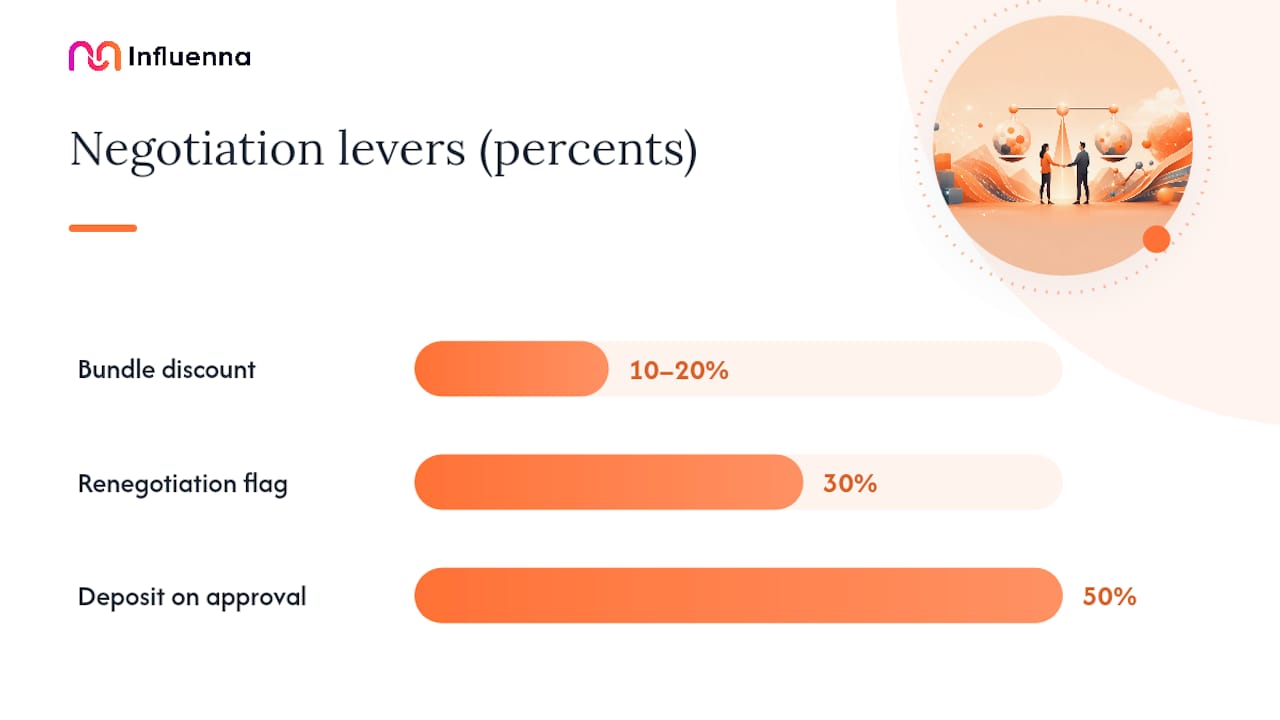
- Bundle multiple posts into one deal. Creators will often discount 10% to 20% per unit for a three-post package versus three separate one-off bookings.
- Shorten exclusivity windows. A 90-day category exclusivity clause costs less than a 12-month one; ask for the shortest window that still protects your campaign.
- Stage payments around deliverables (50% on content approval, 50% on posting) rather than paying everything up front.
- Offer a performance bonus instead of a higher flat fee when a creator is new to your brand and you're unsure how their audience will respond.
Rate calculators that aggregate deal data can help here too. Tools like Influencer Fee's rate calculator commonly flag any quote sitting 30% or more above the calculated range as a candidate for renegotiation, which gives you a concrete number to point to rather than just a gut feeling that the price feels high.
Before signing, confirm in writing: deliverable count and format, usage rights scope and duration, exclusivity terms, revision rounds included, posting window, payment schedule, and what happens if the creator misses the agreed date. A contract clause checklist is worth building once and reusing across every deal.
Pro Tip: Ask for analytics screenshots before you negotiate price, not after. Creators who hesitate to share basic insights data are usually the ones whose numbers won't hold up to scrutiny.
What Does the Math Look Like on a Real Campaign?
Numbers on a rate card mean nothing until you translate them into expected outcomes. Two quick examples show how that works in practice.
- Micro-influencer, engagement-based. A creator with 30,000 Instagram followers and a 3% engagement rate generates roughly 900 engagements per post. At an estimated 2% click-through rate on those engagements, that's about 18 link clicks, and at a 5% landing-page conversion rate, roughly one sale. At a $600 flat fee and a $60 average order value, that single post pays for itself and clears a small margin, before accounting for repeat purchases or brand-lift effects that don't show up in first-click attribution.
- TikTok creator, CPM-based. A creator averaging 80,000 views per video at a $12 CPM works out to a $960 quote. If the video drives a 1% swipe-up or link-click rate, that's 800 clicks, and at a 3% conversion rate, roughly 24 sales. At the same $60 average order value, that's $1,440 in tracked revenue against a $960 spend.
These numbers move fast with small shifts in conversion rate, which is exactly why sensitivity ranges matter more than a single projected figure. A campaign reporting template that tracks actual clicks and conversions against these projections will tell you within a week or two whether a creator's real performance matches their quoted rate.
Where Do These Rate Benchmarks Actually Come From?
Most published influencer rate ranges come from three types of sources: platform-side rate calculators that aggregate real deal data, agency and brand surveys, and market trackers that estimate overall industry spend. None of them agree perfectly, and that's normal.
Statista's influencer marketing topic page tracks overall market size and platform user counts, which is useful for understanding growth trends but says little about what an individual creator should charge. Calculator tools pull from thousands of actual negotiated deals, which makes them more useful for rate-setting, but they skew toward whichever niches and platforms feed them the most data. Agency guides tend to reflect the higher end of the market since agencies negotiate on behalf of established creators.
The practical fix is to stop looking for one right number and instead build a range from two or three sources, then place your specific creator inside that range based on their engagement rate and niche relevance. A few resources worth bookmarking for ongoing tracking:
- Shopify's influencer pricing guide, updated with tiered benchmarks across platforms.
- Hootsuite's influencer rate guide, which covers usage rights and platform-specific uplifts in more depth.
- Rate calculators like Influencer Fee, useful for a quick gut check against a specific quote.
- Library and academic guides, useful as a neutral, non-vendor reference point when you need to justify a budget internally.
| Source type | Best use case | Limitation |
|---|---|---|
| Rate calculators | Quick gut check on a specific quote | Skews toward niches with more submitted deal data |
| Agency/brand guides | Understanding platform and format uplifts | Tends to reflect higher end of market |
| Market trackers (Statista) | Overall spend and growth trends | Doesn't price individual creators |
Which Contract Terms Change the Price the Most?
Usage rights are the line item that surprises brands most often, because the base rate a creator quotes almost never includes the right to run their content as a paid ad. Organic-only usage, meaning the content stays on the creator's own channel, costs the least. Paid usage rights, which let you boost the content as an ad, typically add 30% to 50% on top of the base rate, according to Hootsuite's 2026 rate guide. Indefinite or perpetual usage rights, letting you reuse the content forever across any channel, sit at the top of that range or above it.
Exclusivity adds additional cost, with shorter exclusivity periods costing less than longer ones; industry references generally suggest budgeting an uplift similar to usage rights, around 30% to 50%, on top of the base rate.
A few other clauses worth pricing in before you negotiate:
- Turnaround time. Standard turnaround is usually 7 to 14 days from brief to posting; anything under 72 hours typically triggers a rush fee.
- Revision rounds. Most creators include one or two rounds of revisions in their base quote; additional rounds often carry an extra charge.
- Cancellation terms. Confirm what percentage of the fee is owed if you cancel after content is filmed but before it posts.
- Vague usage language. Watch for rate cards that say "usage included" without specifying duration or channel; that's a red flag that needs clarifying before signing, not after.
Why Transparent Rate Benchmarking Actually Speeds Up Deals
The biggest friction in influencer deals isn't disagreement over price. It's the back-and-forth that happens when neither side has stated their real numbers up front. Negotiation delays often arise because brands lack clear market rate knowledge and creators receive vague inquiries without budget information; clear, upfront communication about deliverables, usage rights, timeline, and realistic rate ranges can speed dealmaking.
The fix is not always a bigger budget. It's a clearer opening move. State the deliverable, the usage rights you need, the timeline, and a realistic rate range in the first message, and most credible creators will respond with a real answer instead of a placeholder quote designed to test how far you'll go. The research on smaller creators outperforming bigger ones on engagement backs this up indirectly: brands that treat micro and nano creators as a serious line item, not an afterthought, tend to get sharper, faster answers because those creators are used to structured asks.
Rate cards help, but only when they're read alongside actual analytics. A number without engagement context is just a wish. Pair the two, and negotiation stops being a guessing game and starts being a conversation between two parties who already agree on what "fair" looks like.
— Igor
Skip the Cold Outreach and Find Creators Who Already Match Your Budget
Every method in this guide still assumes you can find the right creator to quote in the first place, and that's usually the slower half of the job. Influenna is built to fix that specific bottleneck: instead of cold DMs and guesswork, you search a curated pool of creators, talent agencies, and influencer marketing agencies, filter by the details that actually matter, and send a structured collaboration request that states your deliverables and budget range up front.
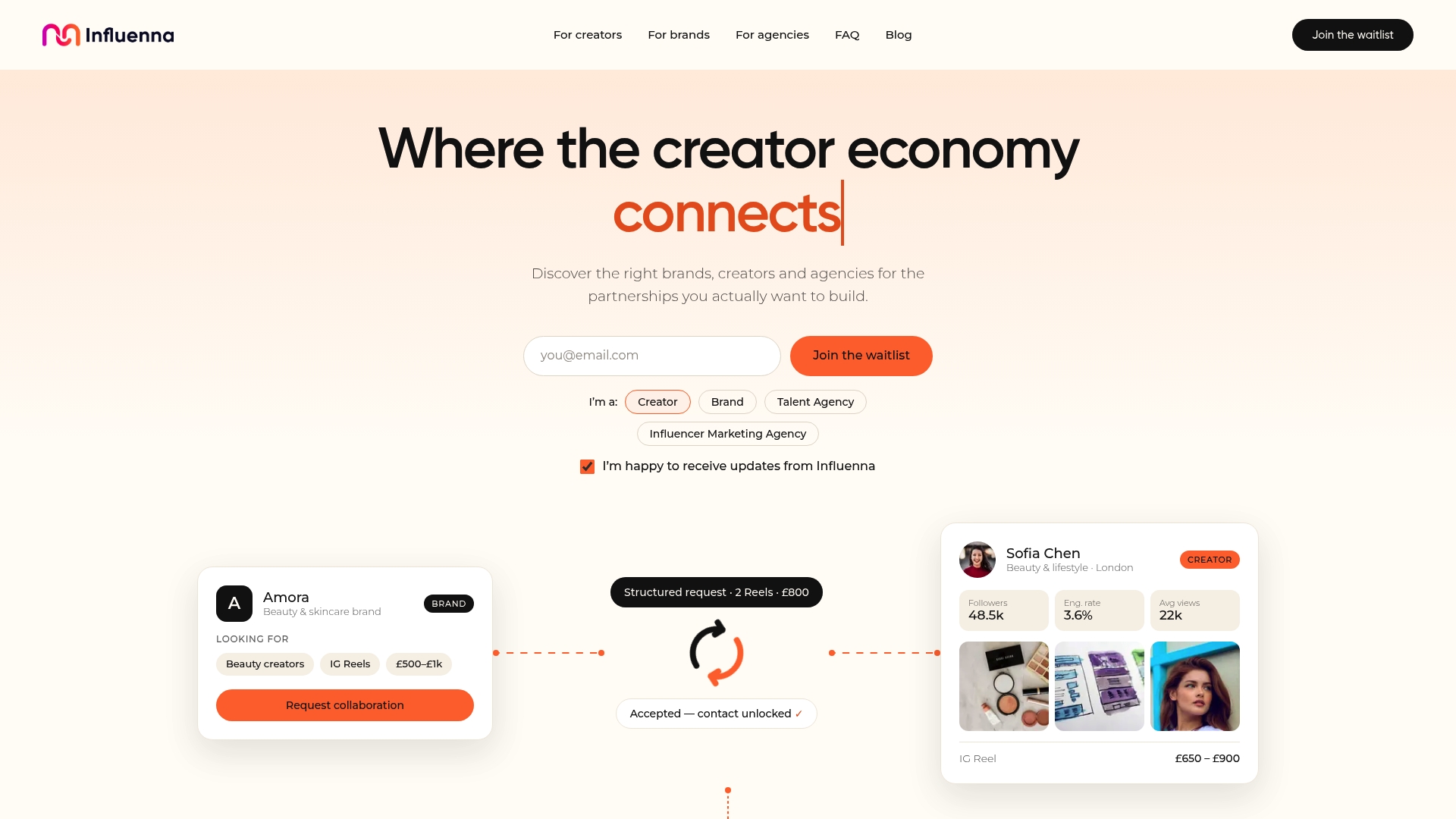
Every account on Influenna, whether it's a creator, a brand, or an agency managing a roster, is reviewed by a person before they get access, so you're not sorting through fake profiles or inflated follower counts. Rates and preferences get set on each side's own terms, and contact details only unlock once both parties approve the match. That structure alone cuts out most of the pricing confusion this article just walked through, since you're negotiating with someone who has already stated their terms instead of fishing for a number in the dark.
Influenna is currently pre-launch, with access available through a waitlist. Join the waitlist to get early access once the marketplace opens.
Sources
- Influencer Pricing: The Cost of Influencers in 2026
- Influencer marketing — Statista topic page
- When it comes to influencers, smaller can be better
FAQ
How many Instagram followers do you need to make $1,000 a month?
There's no fixed follower threshold, since pay depends on engagement rate and niche, but a creator with a healthy engagement rate can often land one to two brand deals a month that add up to around $1,000, based on typical micro-tier rates of $200 to $2,500 per post.
How much does a creator with 50,000 followers typically charge?
A creator with 50,000 followers usually sits at the top of the micro tier or entry into mid-tier pricing, which generally runs $200 to $2,500 for a feed post and up to $10,000 for mid-tier deliverables, depending on engagement rate, niche, and platform.
What are typical influencer rates in 2026?
In general, benchmark ranges for creators span from low hundreds or less for nano tiers up to tens of thousands or more for mega tiers, with Instagram and YouTube often commanding higher prices.
How much is a post worth for a creator with 10,000 followers?
A creator with around 10,000 followers falls into the nano-to-micro border, typically pricing between $150 and $500 per post depending on engagement rate, niche relevance, and whether the deal includes any usage rights or exclusivity terms.
Do influencer rates vary by country?
Yes. Creators based in higher cost-of-living markets like the United States or Western Europe typically charge two to four times more than creators with similar engagement rates in lower cost-of-living regions, reflecting local purchasing power rather than audience quality.