What Are Double Opt-in Introductions on Influenna?
10 min read

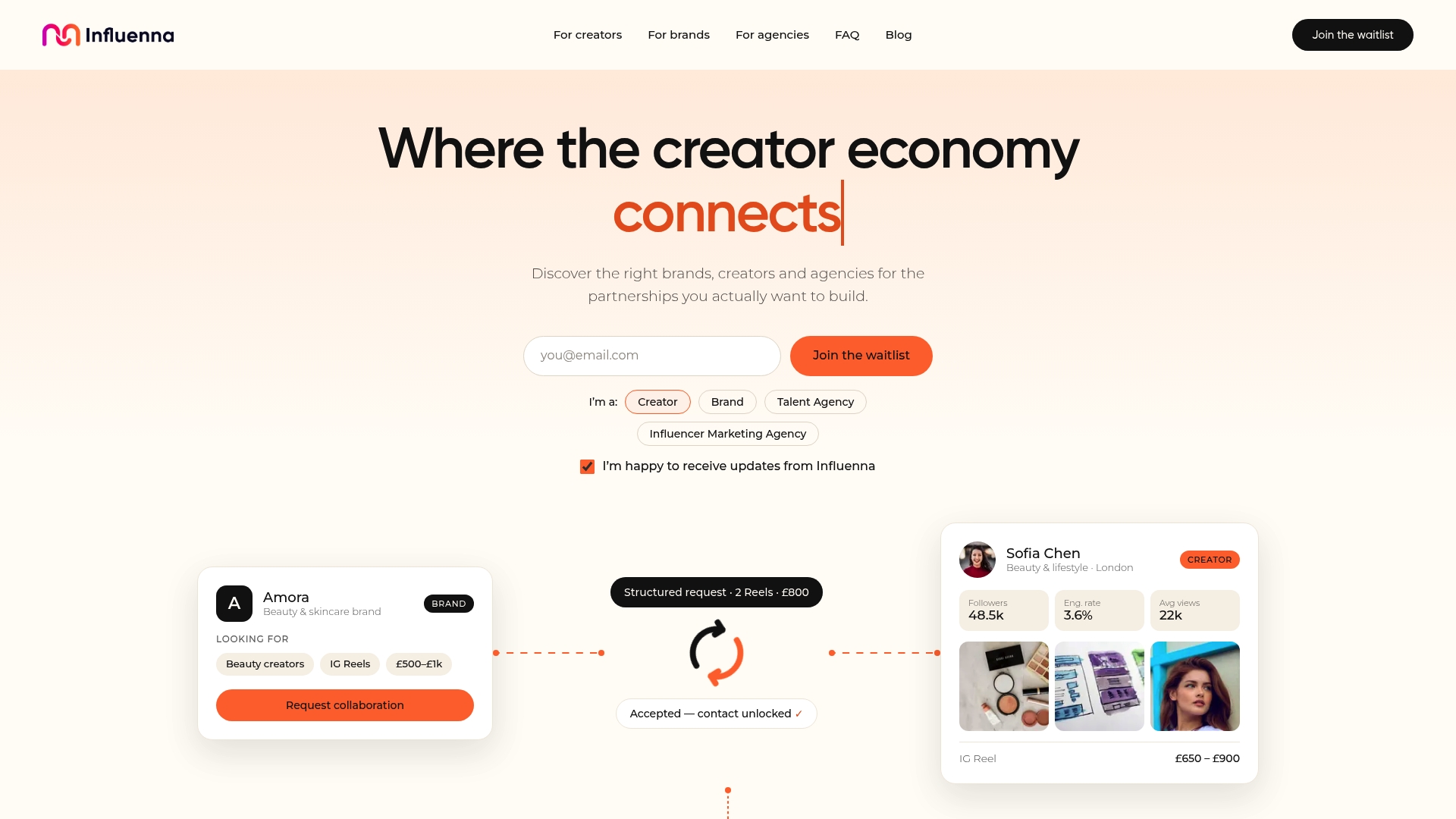
A double opt-in introduction on Influenna is a platform-managed connection that only reveals contact details once both sides say yes. Instead of a cold DM or a mass email blast, one party sends a structured collaboration request, and the other party reviews and approves it before anyone exchanges an email address or phone number.
- The core benefit: it replaces guesswork and cold outreach with a vetted, private introduction built on a clear brief.
- The current state: Influenna is pre-launch, with public access through a waitlist, and contact unlock always requires mutual approval.
Key Takeaways
Double opt-in introductions work because they replace cold outreach with structured, mutually approved requests that only unlock contact details once both parties agree.
| Point | Details |
|---|---|
| Definition | A double opt-in introduction unlocks contact details only after both parties approve a structured request. |
| Workflow | Discovery, a structured request, and mutual approval happen in sequence, with a 14-day expiry on unanswered requests. |
| Strong briefs convert faster | Include objective, deliverables, platform, timeline, compensation range, usage rights, and KPIs in every request. |
| Cap approval rounds | Limit revisions to one or two rounds and separate concept approval from final approval to avoid stalling. |
| Influenna's approach | Influenna pairs human-reviewed accounts with privacy-by-default contact exchange, currently accessible through its waitlist. |
Table of Contents
- How Does the Double Opt-in Introduction Process Work?
- What Are the Benefits for Each Type of User?
- What Should a Strong Collaboration Request Include?
- How Long Do Approval Requests Stay Open?
- What Contact Information Stays Private Until Approval?
- Who Can Join and How Does the Waitlist Work?
- Sources
- FAQ
How Does the Double Opt-in Introduction Process Work?
Every account on Influenna passes human review before it can search, filter, or send a request. That gate matters because a curated marketplace with invite-only access tends to protect quality from the start, rather than letting low-budget or low-effort campaigns flood creator inboxes.
Once inside, here's the sequence:
- Discover — search and filter by platform, niche, and audience signals to find relevant partners.
- Request — send a structured collaboration request with the details a partner actually needs to decide.
- Review — the recipient reads the request inside the platform, not buried in a DM folder.
- Approve — if both sides accept, contact details unlock automatically.
- Connect — the conversation and collaboration move forward directly between the two parties.
Unanswered requests expire after 14 days, which keeps the queue clean and pushes both sides toward a timely decision rather than an open-ended maybe. This structured sequence mirrors the kind of SOP that keeps creator collaborations repeatable: discovery, review, and approval each happen in order, not all at once in a single rushed message.
What Are the Benefits for Each Type of User?
A mutual-approval system pays off differently depending on which side of the table you sit on.
For brands, the biggest win is signal quality. You stop chasing replies from creators who were never a fit, and budget expectations surface earlier because structured requests ask for them upfront.

For creators, it means fewer spammy invitations landing in your inbox and clearer terms before you ever hand over contact information. You see the brief, the compensation range, and the usage rights before deciding whether a conversation is worth having.
For talent agencies, managing a roster from one account means pitching multiple creators without juggling five separate inboxes, while retaining full control over who represents whom.
For influencer marketing agencies, centralized discovery means campaign sourcing for multiple brand clients happens in one place, with the same quality bar applied every time.
- Brands: higher-signal outreach, less time on unqualified replies
- Creators: safer discovery, fewer low-quality pitches
- Talent agencies: streamlined roster pitching with retained control
- Influencer marketing agencies: centralized, consistent campaign sourcing
Pro Tip: If you manage a roster or multiple brand clients, build one reusable brief template first. Sending the same structured fields every time cuts your own review time as much as it speeds up the other side's decision.
This structure lines up with what makes influencer marketplaces useful in the first place: centralizing discovery, briefs, and approvals in one thread instead of scattering them across email and social messages.
What Should a Strong Collaboration Request Include?
Requests that get approved fast tend to share the same ingredients. Vague pitches stall because the recipient has to chase down missing details before they can even say yes.
Include these elements every time:
- Objective — what the collaboration is trying to achieve.
- Deliverables — exact content type and quantity (one Reel, two TikToks, a YouTube integration).
- Platform(s) — where the content will run.
- Timeline — posting window and any hard deadlines.
- Compensation or band — a range works better than silence.
- Usage rights — how long and where the brand can reuse the content.
- KPIs — what success looks like, if measurable.
A compensation range, rather than a single fixed figure or no figure at all, helps the other side self-select faster instead of negotiating from zero information. On approval limits, cap revisions at one or two rounds and separate concept approval from final-deliverable approval. That single change avoids the endless back-and-forth that kills momentum on far too many creator deals, since capping approval rounds and reviewing a concept before full production keeps a collaboration moving instead of stalling in edit purgatory.
A short brand safety checklist also speeds things along:
- Disclosure requirements are stated up front
- Exclusivity windows, if any, are named
- Prohibited claims or competitor conflicts are flagged early
Standardizing these criteria turns approval into a quick alignment check instead of a correction cycle, since treating low-risk requests differently from high-risk ones lets both sides move faster without lowering the bar.
How Long Do Approval Requests Stay Open?
A request stays active for 14 days before it expires unanswered. If you haven't heard back within three to five days, a short, polite follow-up is normal and expected. It's not pushy. It's how you keep a request from quietly dying in an inbox.
You can also accept conditionally. If the terms are close but not quite right, propose a specific change (usage window, deliverable count, timeline) rather than reopening the entire brief for a full second review.
- Follow up once, politely, after 3 to 5 days of silence
- Negotiate specific terms instead of restarting the whole conversation
- Cap review rounds at one or two, even for trusted repeat partners
- Use spot checks for established collaborators instead of full reviews every time
Endless review cycles are avoidable. Limiting rounds and applying lighter checks to partners you've already worked with keeps things moving without sacrificing quality control.
What Contact Information Stays Private Until Approval?
Nothing that identifies how to reach someone directly is visible before both sides approve. No email address, no phone number, no direct contact method shows up in search results, on a profile, or anywhere else on the platform ahead of a mutual yes.
What's visible before approval:
- Platform presence (Instagram, TikTok, YouTube)
- Audience metrics, labeled as verified, estimated, or self-reported
- Niche, content style, and stated rates or preferences
What stays hidden until unlock:
- Email address
- Phone number
- Any other direct contact method
This structure exists for a reason. Mutual approval reduces spam and builds trust compared with open, cold outreach, where anyone with an email address can pitch anyone else regardless of fit.
Who Can Join and How Does the Waitlist Work?
Influenna reviews every application by hand before granting marketplace access. That review looks at whether an account represents a real creator, brand, talent agency, or influencer marketing agency, which keeps the pool relevant instead of flooded with low-effort accounts.
Agencies manage their entire roster or client list from a single account rather than juggling logins for every person they represent, which keeps representation clear without duplicating profiles.
- Creators, brands, talent agencies, and influencer marketing agencies can all apply
- Human review happens before marketplace access, not after
- The public site is currently a waitlist, with full CTA details below
A Few Honest Observations on Approvals and Speed
The mistake I see most often has nothing to do with the platform mechanics. It's the brief itself. Vague objectives, no stated usage rights, and unlimited revision rounds turn a simple approval into a slog for both sides.
The fix is almost boring in its simplicity: use a structured brief every time, cap rounds at two, and attach a short brand safety checklist before you ever send a request. None of that requires special negotiating skill. It requires discipline. Influenna's human-reviewed accounts and privacy-by-default contact exchange remove some of the risk, but a sloppy brief still slows down even the best-matched partnership.
— Igor
Join the Waitlist for Curated, Mutual-Approval Introductions
Cold DMs and scattered email threads make discovery slower for everyone. Influenna replaces that with a curated marketplace where every account is reviewed by a person, and structured requests do the work a cold pitch never could.
Waitlist access means your profile enters a pool built for real matches, not mass outreach, with contact details unlocked only once both sides approve a request. That same principle of asking for permission before you connect applies well beyond contact details. It's also worth applying to how you frame a brief when reaching partners across different markets or languages, where wording a pitch clearly across cultural differences can be the difference between a fast yes and a confused no.
If you're a brand, creator, talent agency, or influencer marketing agency looking for a better way to find and vet partners, join the Influenna waitlist to get early access when the marketplace opens.
Sources
- The Best Ways to Approve Creator Content Without Slowing Down - My Blog
- Why an Influencer Marketplace Matters for Brands and Creators » World Business Outlook
- Influencer Campaign Marketplace: Build Guide 2026 | LOW/CODE
FAQ
What Does Double Opt-in Mean on Influenna?
It means both the sender and recipient of a collaboration request must approve before contact details unlock. Neither side sees an email address or phone number until that mutual approval happens.
How Long Does an Introduction Request Stay Active?
Requests expire after 14 days if no one responds. A polite follow-up after three to five days of silence is normal practice while a request is still open.
Can I Negotiate Terms Without Restarting the Whole Approval?
Yes. Propose a specific change, like a different usage window or deliverable count, rather than reopening the full brief for another complete review.
Is Influenna Open to the Public Right Now?
Influenna is currently pre-launch, and the public site operates as a waitlist rather than open signup. Every account that joins later passes human review before getting marketplace access.
How Is This Different From a Single Opt-in Introduction?
A single opt-in method lets one side view or contact another without matching consent, which is closer to a cold DM. Influenna's mutual-approval structure requires both parties to agree before any contact information changes hands.