7–10 Day Creator Onboarding: One Page Packet for Agencies
13 min read

A complete creator onboarding checklist is a one-page packet paired with a staged standard operating procedure that moves a creator from signed contract to approved first deliverable in 7 to 10 days. The recommended shape runs preboarding, packet delivery, first brief, verification, then 30/60/90 check-ins. Done right, it cuts revisions, closes compliance gaps, and gets usable content out faster.
TL;DR:
- Creators should be verified with a quick, structured scorecard evaluating reach, engagement, and follower trends within an hour before full campaign approval.
- The onboarding process spans 7 to 10 days, including delivery of a comprehensive packet, production stages, and milestone check-ins at 30, 60, and 90 days.
- The onboarding packet must contain a clear contract summary, a one-page brand guide, and a detailed first brief to minimize questions and revision cycles.
- Payment schedules should be milestone-based with specific invoice procedures, and discrepancies require a defined process to prevent delays and disputes.
- Using curated creator marketplaces with pre-approved accounts significantly reduces outreach and verification time, streamlining the onboarding pipeline.
Table of Contents
- What Does a Creator Onboarding Checklist Cover Stage by Stage?
- What Belongs in the Creator Onboarding Packet?
- What Compliance and Contract Steps Protect a Campaign?
- How Do You Verify Creator Metrics Before a Full Campaign?
- What Is the Day-by-Day Onboarding Timeline?
- What Does a One-Page Quick Checklist Look Like?
- What Do Agencies Get Wrong About Vetting New Creators?
- What Should the Payment Process Actually Look Like?
- Why Structured Onboarding Matters More Than Most Agencies Admit
- A Faster Way to Find Creators Worth Onboarding
- Sources
- FAQ
What Does a Creator Onboarding Checklist Cover Stage by Stage?
Onboarding breaks cleanly into four windows, and each one needs its own checklist rather than one long master list nobody finishes reading. This staged structure mirrors standard HR onboarding phasing, which recommends 30/60/90 check-ins specifically because ramp time and early attrition both drop when the first 90 days have defined milestones instead of a vague "get settled in" period.
Preboarding happens before any content gets made:
- Send the signed contract and confirm payment terms in writing.
- Set up platform access: shared drive, content management tool, group chat.
- Send a short welcome message with the point of contact and expected next steps.
- Collect intake form fields: legal name, account handles, sample post links, preferred posting window, and audience data exports.
Day one and week one turn preboarding into production:
- Introduce the creator to their point of contact by name, not a shared inbox.
- Deliver the first brief the same day the contract is signed.
- Request one sample asset in the agreed format before full production starts.
- Confirm submission method, file naming, and who signs off on revisions.
The 30/60/90 window is where most agencies quietly drop the ball. Day 30 should check content quality and cadence. Day 60 should compare early metrics against the baseline scorecard. Day 90 should decide whether the creator moves into an ongoing retainer relationship or the pilot ends.
What Belongs in the Creator Onboarding Packet?
The packet is the single artifact a creator should need to start work without asking a follow-up question. If your team fields the same three questions from every new creator, something is missing from this document, not from the creator's attention span.
A working packet includes:
- Signed contract summary: payment amount, payment timing, currency, and required invoice format in one paragraph, not buried on page 6 of a legal document.
- One-page brand guide: do's and don'ts, mandatory messaging points, visual references, and any claim restrictions (health, financial, or performance claims that legal has flagged).
- First brief template: format and length specs, mandatory talking points, two or three reference clips showing the tone you want, submission method, exact file naming convention, and the revision policy (how many rounds, what triggers an extra round).
- Point of contact and response time expectations: who answers questions and how fast.
Structured onboarding built this way is exactly what cuts per-creator management time and shortens ramp for agencies running multiple creators at once. A ready-made influencer brief template saves you from rebuilding this document from scratch every campaign.
Pro Tip: Put the revision policy in bold, on its own line, not buried in a paragraph. Vague revision terms cause more scope disputes than any other single onboarding gap.
What Compliance and Contract Steps Protect a Campaign?
Skipping verification and disclosure mapping is how brands end up explaining a mislabeled sponsored post to a platform's trust and safety team. A compliance-first checklist front-loads this work instead of discovering gaps after content goes live, a sequence Adsales recommends explicitly.
Build the checklist around three categories:
- Identity and account control: legal name, proof the account belongs to them, and a representative's contact information if an agency manages the creator.
- Disclosure phrasing by format: feed posts need a visible "#ad" or "Paid partnership with [Brand]" tag; Stories need the disclosure sticker on the first frame, not the fifth; short-form video needs a spoken or on-screen disclosure in the first three seconds; livestreams need a recurring verbal disclosure repeated at intervals. Generic "follow FTC guidelines" language in a contract is not a checklist item. Worksuite's onboarding guide recommends mapping these by format precisely because a single blanket rule gets misapplied across platforms.
- Contract essentials: claims approval process, content usage and whitelisting rights, payment trigger conditions, and a named escalation contact for disputes. Review your influencer contract clauses against this list before a single brief goes out.
How Do You Verify Creator Metrics Before a Full Campaign?
Verification should take an hour, not a week.
Three fast options work: read-only platform access, timestamped Insights exports, or screenshots cross-checked against public post URLs. Viralfy's verification framework recommends exactly this sequence when direct API access isn't available.
Score every creator on a compact set of fields before deciding pilot versus full campaign:
- 30-day reach by content format (feed, Stories, Reels or equivalent short-form video).
- Average reach per post over the same window.
- Engagement actions broken out: saves, shares, and comments, not a single blended "engagement rate."
- Follower trend direction over 90 days, not a single snapshot number.
A short, six-field scorecard converts raw platform data into a decision signal, which is the entire point of verification: turning numbers into a green, amber, or red call before money moves.
Green metrics mean proceed to a full campaign. Amber means run the paid pilot but hold the option to renegotiate rate. Red, meaning reach or engagement well below the media kit's claims, means decline or ask for updated numbers before any contract discussion continues.
What Is the Day-by-Day Onboarding Timeline?
A 7 to 10 day pilot to first approved deliverable is achievable when the sequence is defined in advance, not improvised per creator. This timeline comes directly from Conbersa's operational SOP for structured creator onboarding.
- Day 1: contract signed, onboarding packet delivered same day.
- Day 2: creator acknowledges receipt and confirms understanding of the brief.
- Days 3 to 5: first deliverable produced and submitted.
- Day 6: internal review against brand guidelines and brief specs.
- Days 7 to 8: revision round, if needed.
- Days 9 to 10: final approval and payment released.
Escalate immediately if a creator doesn't acknowledge the packet within 48 hours, doesn't submit a first asset within 5 days, or repeatedly asks questions the brief should have answered. Each trigger has a templated follow-up message and a decision point: extend the pilot or reassign the workload. As the relationship moves through 30/60/90 check-ins, your team's role shifts from active support to light oversight, freeing capacity for the next wave of creators.
What Does a One-Page Quick Checklist Look Like?
Everything above compresses into a single document your team can run in one meeting.
Intake fields to collect at sign-off: legal name, account handles, payment details, three sample posts per format, and preferred posting window.
Launch-day tick list: contract signed, packet sent, point of contact introduced, first brief delivered, submission method confirmed.
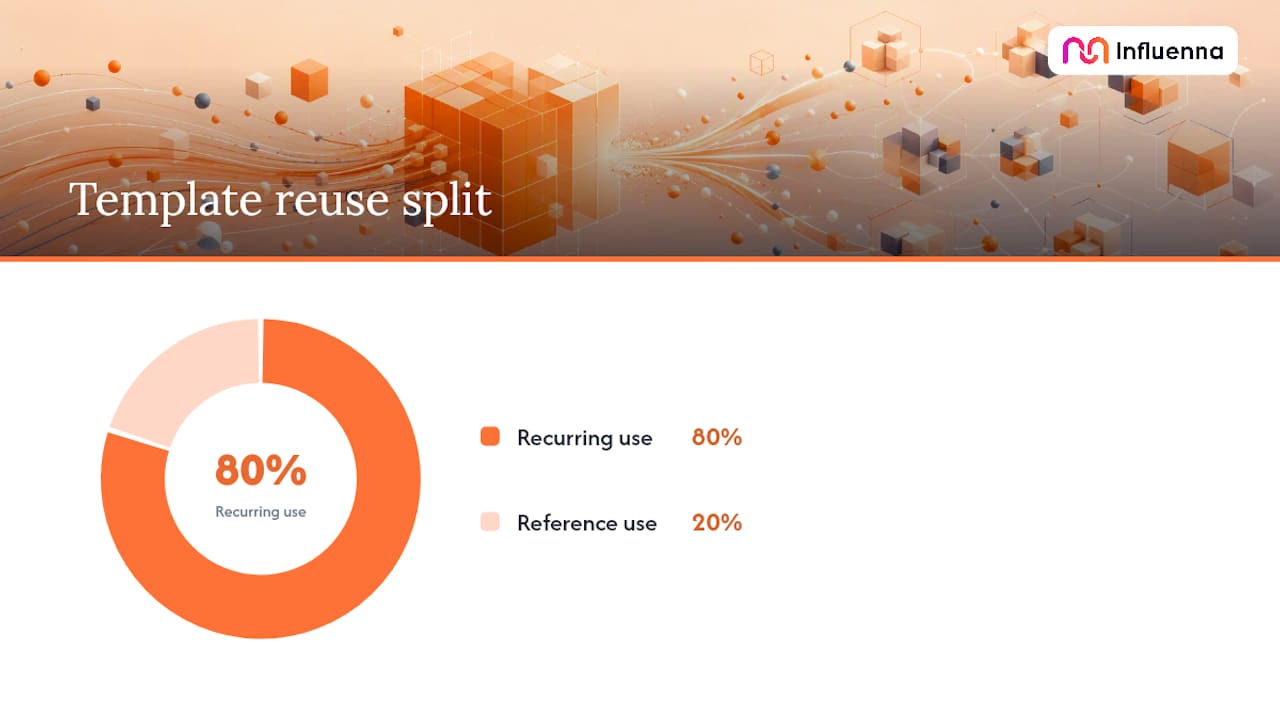
| Template | Purpose | Reuse frequency |
|---|---|---|
| First-brief template | Format, tone, talking points, references | Every campaign |
| Contract summary sheet | Payment terms, usage rights, claims | Every creator |
| Verification scorecard | Reach, engagement, follower trend | Every new partnership |
| Disclosure examples by format | Feed, Stories, short-form, livestream phrasing | Reference document |
| Revision log | Round count, feedback, sign-off | Every deliverable cycle |
Save these five templates once and customize only the brand-specific fields (product names, campaign hashtags, claim restrictions) per campaign. Trainual's onboarding research backs this approach: putting a checklist inside a reusable system, rather than rebuilding it from memory, is what makes onboarding scale past a handful of creators.
What Do Agencies Get Wrong About Vetting New Creators?
Curated, human-reviewed marketplaces change the vetting math. When every account is reviewed before it can send or receive requests, verification starts from a stronger baseline instead of zero. Influenna operates this way: mutual approval happens before contact details are ever exchanged, which cuts the cold-outreach noise that eats hours of an account manager's week.
The best first briefs name a format, a length, and one or two talking points, and nothing else. Overloaded briefs are the top cause of revision cycles.
What Should the Payment Process Actually Look Like?
Payment disputes usually trace back to one root cause: the contract said "net 30" and nobody defined what day the clock starts. Fix the ambiguity before it becomes a discrepancy.
Set a payment schedule tied to milestones, not just delivery dates. A common structure pays 50% on signed contract and 50% on approved final deliverable, though some agencies split into three: signing, first draft approval, and final approval. Whatever the split, state it in the contract summary inside the onboarding packet, not just the master agreement.
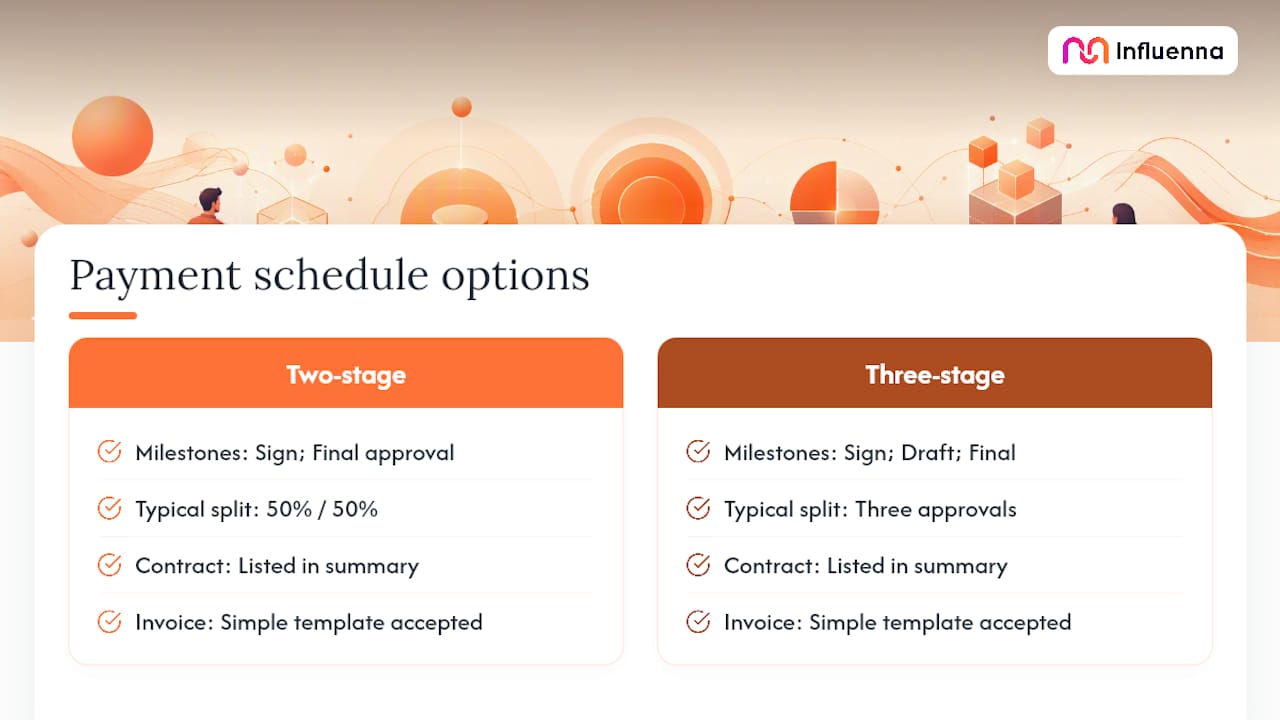
Invoicing procedures need three fixed elements: the invoice format the creator should use (many agencies accept a simple template rather than requiring formal accounting software), the exact information required on it (campaign name, deliverable dates, agreed rate), and the submission channel. Ambiguity here is what causes a creator to email an invoice to the wrong inbox and then wait three weeks wondering why nobody responded.
Handle payment discrepancies with a defined process rather than case-by-case improvisation: the creator flags the discrepancy in writing within a set window (5 business days is common), the point of contact confirms the original agreed terms against the contract summary, and any correction gets processed within a stated turnaround, ideally the next payment cycle rather than an open-ended promise. Document every discrepancy resolution. Repeated payment friction with the same creator is often an early warning sign the payment schedule itself needs restructuring, not just the individual dispute.
Why Structured Onboarding Matters More Than Most Agencies Admit
Most creator churn doesn't come from bad creative fit. It comes from a slow, confusing first two weeks that makes a creator wonder if the brand is disorganized everywhere else too. Structured onboarding fixes the controllable part: contracts, briefs, and timelines get standardized, while creative direction stays loose enough to protect the creator's actual voice.
The one metric worth tracking above all others is time to first approved deliverable. If that number creeps past 10 days consistently, the packet has a gap somewhere.
— Igor
A Faster Way to Find Creators Worth Onboarding
Influenna shortens the step before onboarding even starts: finding creators worth vetting in the first place. Every account, creator, brand, talent agency, or influencer marketing agency, gets reviewed by a person before it can send or receive requests.
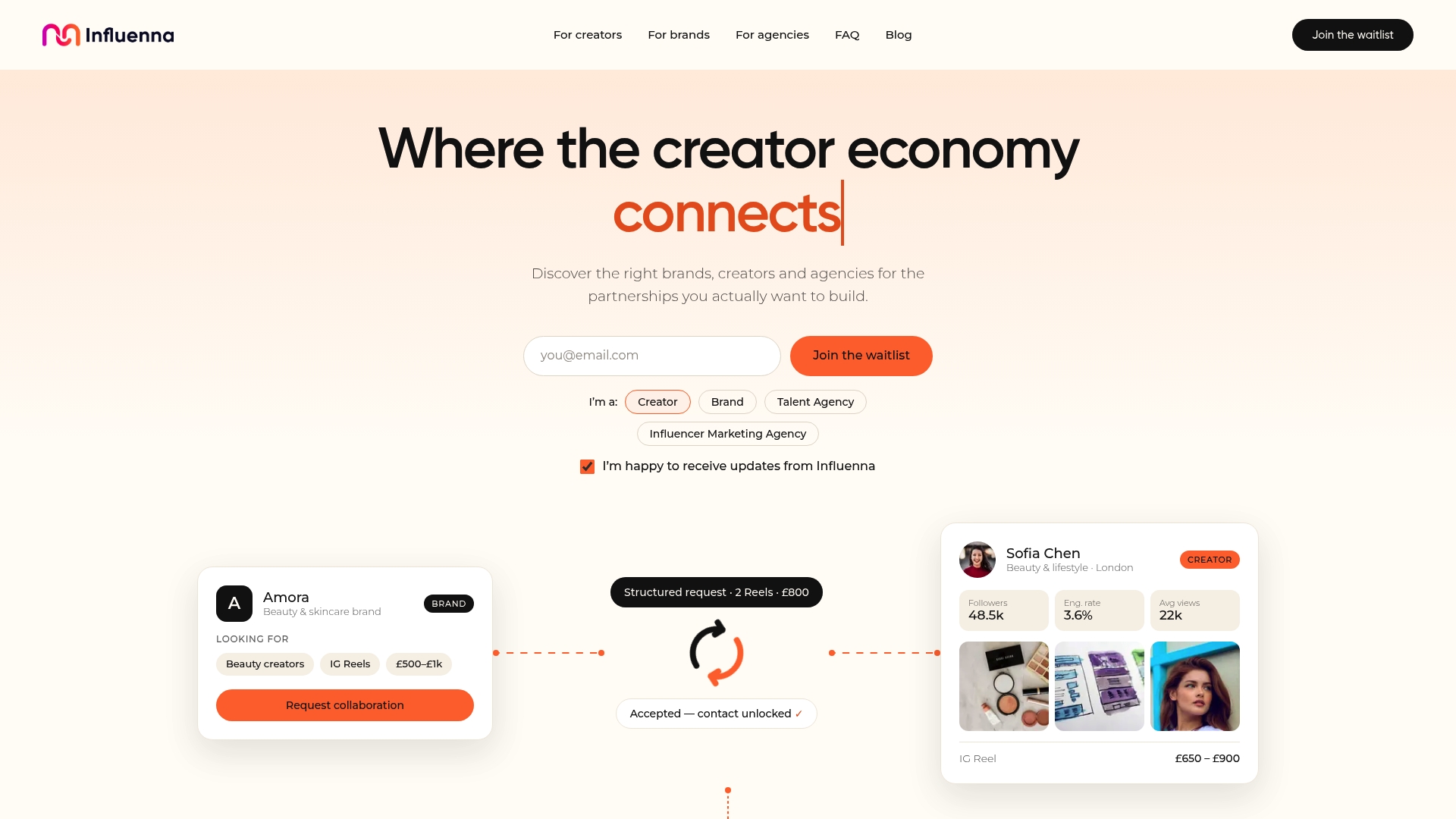
Instead of cold DMs and guesswork, you send a structured collaboration request with real details upfront, and contact information unlocks only once both sides say yes. That mutual approval step means the creators reaching your inbox already cleared a screening bar, which trims real time off the verification stage of your onboarding checklist. For teams managing rosters or running campaigns across multiple brand clients, Agency accounts let you handle discovery and requests from a single place instead of juggling logins. Visit the Influenna waitlist to see how curated discovery fits into your onboarding pipeline.
Sources
Start with the Conbersa onboarding workflow guide for the 7 to 10 day timeline, Worksuite's onboarding playbook for disclosure mapping, and Viralfy's verification framework for scorecard fields. Download or build a brief template, a contract summary sheet, and a reporting template, then reuse them every campaign rather than rebuilding from scratch. Reporting tools like social media reporting platforms can also help track the KPIs your scorecard defines.
- UGC Creator Onboarding Workflow: What Does a Complete Checklist Look Like? | Conbersa
- Influencer Onboarding Made Easy: Streamlining the Process | Worksuite
- Instagram Creator Onboarding Checklist: A Data-Driven Playbook for Brands and Creators | Viralfy
- Adsales
FAQ
What Is the 30/60/90 Onboarding Rule?
It's a check-in structure that reviews a creator's progress at 30, 60, and 90 days after onboarding starts, checking content quality at day 30, metrics against baseline at day 60, and whether to move to an ongoing relationship at day 90.
How Do I Create an Onboarding Checklist for Creators?
Build it in four stages: preboarding (contracts, access, intake form), an onboarding packet (contract summary, brand guide, first brief), a 7 to 10 day pilot to first approved deliverable, then 30/60/90 check-ins to track ramp and retention.
What Should Be in a Creator Onboarding Packet?
A complete packet includes a signed contract summary with payment terms, a one-page brand guide with do's and don'ts, and a first brief template specifying format, talking points, submission method, and revision rules, all designed to guide the creator clearly from the start.
How Long Should It Take to Get a Creator's First Approved Deliverable?
Agencies using structured onboarding workflows typically target 7 to 10 days from signed contract to approved first deliverable, following a set sequence of packet delivery, acknowledgement, production, review, and revision.
How Do You Verify a Creator's Metrics Before Paying Full Rate?
Use read-only platform access or timestamped Insights exports when possible, or request screenshots cross-checked against public post URLs, then score reach, engagement actions, and follower trend against a simple green/amber/red threshold.