30–50% More Replies: Email vs DM Outreach for Brands & Creators
10 min read

Email wins for mid-tier and larger creators and for any formal, paid campaign; DMs win for nano and micro creators and quick, informal asks. When you're not sure which bucket someone falls into, run both: warm them up on social first, then follow with an email, or just ask for their best email inside a DM. Whichever channel you pick, the message lives or dies on one thing: a clear, specific budget signal paired with a small next step.
TL;DR:
- Personalized cold email to mid-tier and larger creators yields reply rates up to 30%, especially when including clear budget signals and specific asks.
- DMs are more effective for nano and micro creators, offering response rates between 10 and 20 percent and faster initial reads, but slower replies at scale.
- Combining social warm-up with email follow-ups can boost reply rates by around 30 to 50 percent over single-channel outreach.
- For creators over 100K followers, contacting via email or through their agency is more reliable, while DMs work best for smaller, less saturated audiences.
- Keeping initial messages brief, referencing specific content, and including a budget range significantly increases engagement chances on both channels.
Table of Contents
- Email vs DM Outreach: Response Rates, Speed, and Signal
- Which Channel Fits Each Creator Tier?
- What to Say First: Structure, Length, and the Budget Signal
- How Should You Follow Up Without Being Annoying?
- What Should You Actually Measure?
- Why the Channel Debate Misses the Real Problem
- A Different Way to Start the Conversation
- Sources
- FAQ
Email vs DM Outreach: Response Rates, Speed, and Signal
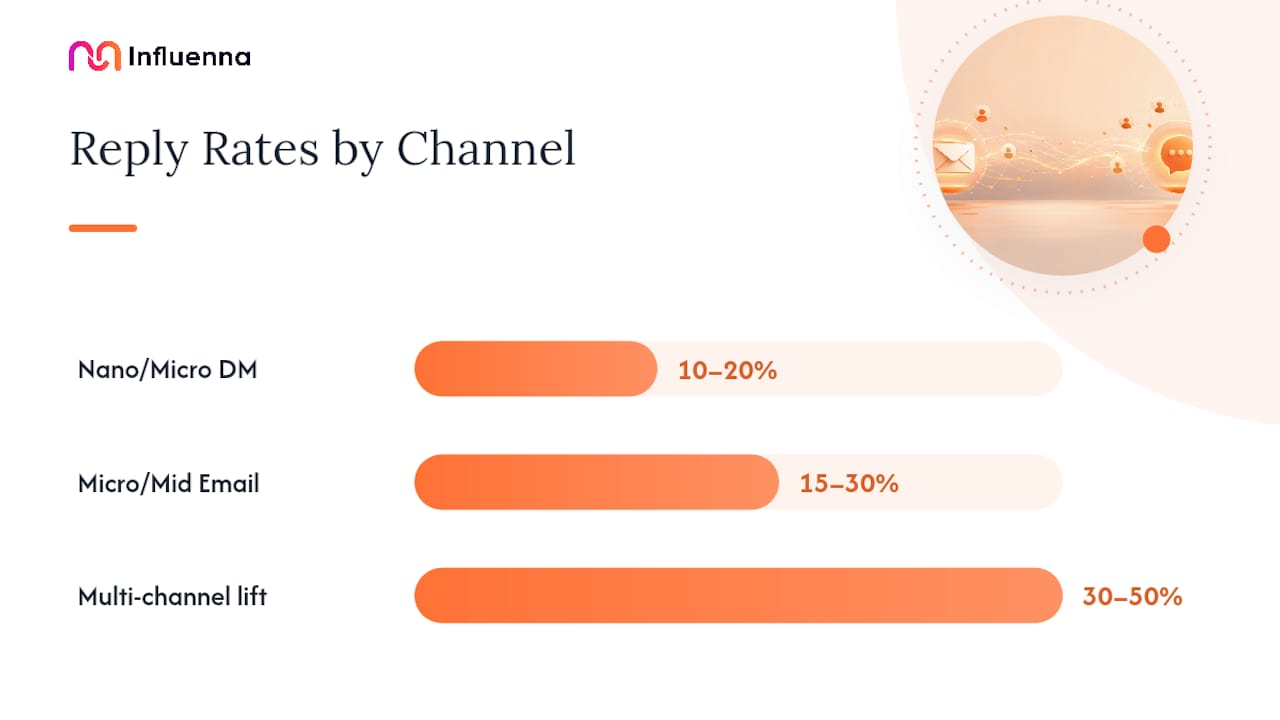
The numbers split cleanly by channel and by creator size. DMs to nano and micro creators, roughly under 100,000 followers, land reply rates of 10 to 20 percent, largely because their inboxes aren't flooded yet and a DM still feels personal. Cold email to micro and mid-tier creators does better on average: 15 to 30 percent when the message is personalized and states a budget up front.
Speed tells a different story. DMs get read faster (creators check them constantly) but get answered slower once volume climbs, because platforms bury unfamiliar senders in a "requests" folder few people check daily. Email sits in a normal inbox, competes with real correspondence, but rewards patience.
Reply rate snapshot:
- Nano/micro DM: 10–20% reply rate, faster read, slower structured reply
- Micro/mid-tier email: 15–30% reply rate with personalization and budget clarity
- Multi-channel sequences (social warm plus email): roughly 30 to 50 percent lift over single-channel outreach
Scalability favors email outright. You can send, track, and follow up on a hundred email pitches through a spreadsheet or CRM; doing the same through DMs means juggling multiple apps and losing history the moment a thread gets archived. Deliverability cuts the other way, though. Cold email reply rates have been sliding industry-wide, and poor authentication or list hygiene can sink a message before a human ever sees it. DMs from unfamiliar accounts face their own filter: platform throttling and requests folders that some creators never open.
Which Channel Fits Each Creator Tier?
Creator size changes everything about which channel gets opened first.
- Nano and micro (5K to 100K followers): DMs usually outperform here. Inboxes aren't saturated, replies come faster, and a short, specific message reads as genuine interest rather than spam. Check the bio first. Many nano creators list a preferred contact method, and ignoring it is a fast way to get skipped.
- Mid-tier (100K to 1M) and macro creators: Business email, or a manager's inbox, performs better. At this size, DMs often get archived, delegated to an assistant, or simply lost in volume. A structured brief sent by email signals you're a serious buyer, not another cold pitch.
- Managed creators and agency-represented talent: Route everything to the agency or manager's email address. Never try to negotiate a paid deal inside a DM thread. Reps expect formal terms in writing, and a DM negotiation looks amateur before you've even discussed rates.
Pro Tip: If a creator's bio lists both an email and a "DM for collabs" note, that's not a coincidence. It's a filter. Use the channel they named, not the one that's easiest for you.
What to Say First: Structure, Length, and the Budget Signal
The opening line decides whether the rest gets read. Skip the "Hi, love your content" filler and reference something real: a specific post, a stat from their audience, a recent campaign they ran.
- Open with specificity. Name the post, the result, or the niche detail that made you reach out. Generic flattery gets deleted in under three seconds.
- State who you are and what you want. One sentence on the brand, one on the deliverable (a Reel, a YouTube integration, a TikTok series), and a rough budget range or compensation signal. This single element moves more replies than any other part of the message.
- Close with a small, explicit ask. "Reply if interested," "What's your best email for a full brief?", or "Free for a 15-minute call this week?" Anything vaguer stalls the conversation.
Keep DMs under about 150 words and initial emails under 200. Longer messages read as a mail-merge blast even when they aren't, and creators triage by length before they triage by content.
Pro Tip: Put the budget number in a range, not a single figure. "$300 to $500 for a dedicated Reel" invites a reply. "Let's discuss compensation" invites silence. For ready-made structures you can adapt fast, message templates built for reply rates save you from starting cold every time.
How Should You Follow Up Without Being Annoying?
It is recommended to send one polite follow-up if there is no reply. A third attempt rarely helps and may risk damaging goodwill.
- Send your first message on the channel that fits the creator's tier.
- Wait five business days. If nothing comes back, send exactly one polite follow-up on the same channel.
- If a DM goes cold, don't pitch again. Ask for their best email instead and move the conversation somewhere more durable.
- If email goes cold, try a light platform touch first (a genuine comment or like) to re-warm the relationship before a second email.
- Still nothing? Archive the contact and revisit in a quarter. Inboxes change, campaigns end, and timing matters more than persistence.
This sequence, social warm, concise email with budget, one follow-up, archive, extracts most of the incremental lift available without turning into spam.
What Should You Actually Measure?
Reply rate is the headline number, but it's not the only one that matters. Track four things: raw reply rate, positive-reply rate (a real yes or a request for the brief), time-to-reply, and how many replies convert into a signed brief.
- Don't judge DM outreach by click metrics alone. A DM rarely carries a trackable link, so reply quality and conversion to a paid brief are your real signals.
- Tag conversations in a CRM and use UTM parameters on any email links so you can see which subject lines or sequences actually move people to a call.
- Treat multi-channel attribution conservatively. If a reply comes after a social warm-up and an email, credit the sequence, not the last touch. Coordinated outreach tends to lift reply quality more than raw volume, producing longer, more substantive replies rather than just more of them.
- On platforms like YouTube, platform-specific engagement metrics can help you judge whether a creator's audience matches your campaign before you even send the first message.
Email's paper trail makes attribution easier. DMs will always be the messier channel to measure, even when they're the better first move.
Why the Channel Debate Misses the Real Problem
Brands spend an enormous amount of energy arguing over email versus DM when the bigger issue is what's inside the message. A vague ask with no budget fails on either channel. A specific, well-targeted pitch with clear compensation works on both.
What actually moves the needle is matching the right creator to the right campaign before you ever open a compose window, then writing a brief tight enough that the creator knows exactly what you want and what you're paying. Structured requests beat cold pitches because they remove the guesswork on both sides: the creator knows this is a real opportunity, not a mass blast, and the brand isn't wasting a message on someone who was never a fit.
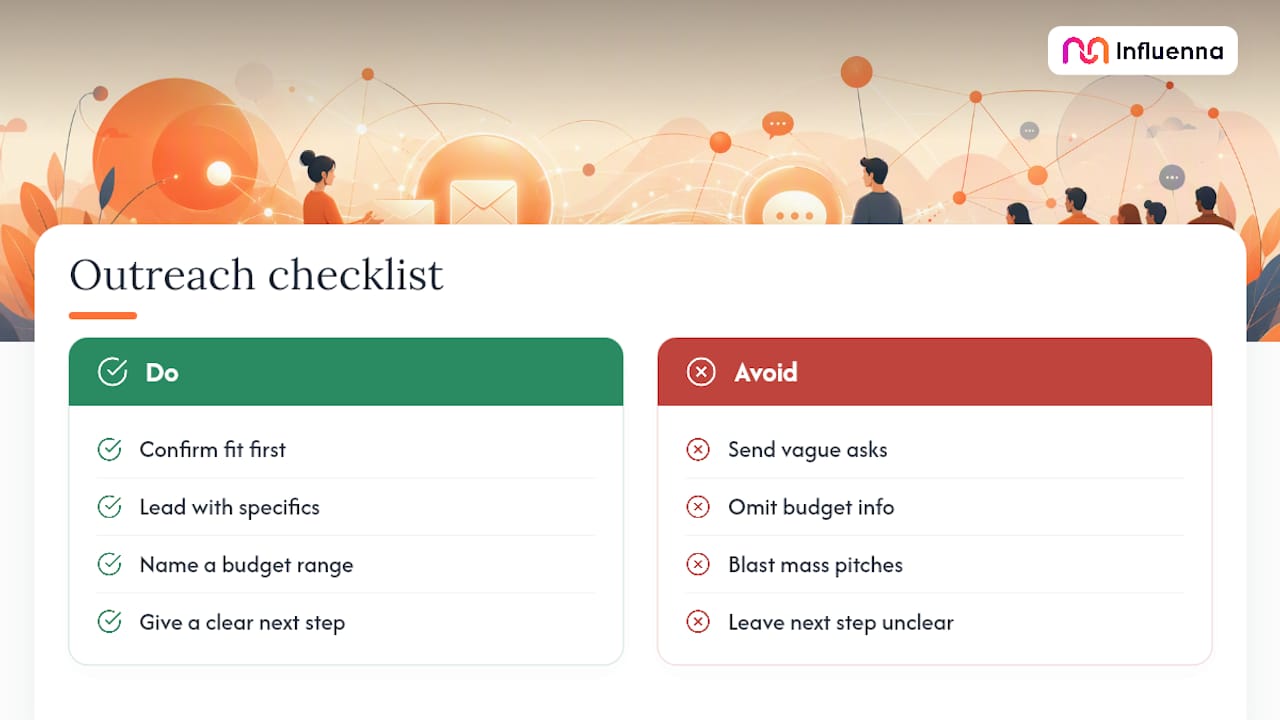
A quick checklist worth keeping: confirm fit before reaching out, lead with something specific, name a budget range, and give a small, clear next step. Get those four right, and the channel becomes a secondary decision.
— Igor
A Different Way to Start the Conversation
Cold outreach, on either channel, puts the burden entirely on you to guess who's a fit, chase down contact details, and hope the message lands before it's buried. Influenna takes a different route: every creator, brand, and agency on the marketplace is reviewed by a person before joining, so you're browsing real accounts instead of guessing from a bio.
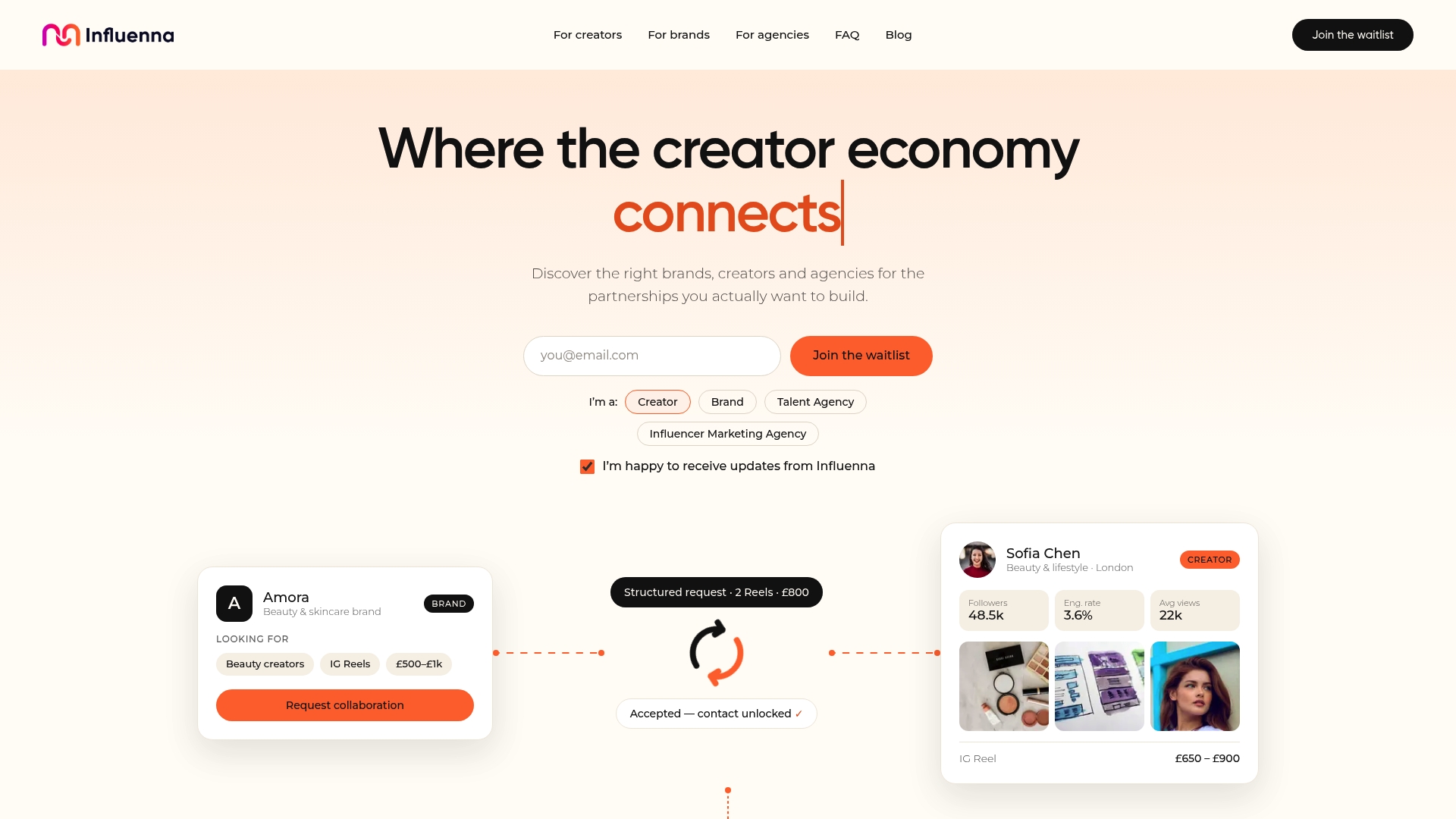
Instead of sending a cold DM or hunting for a manager's email, you search and filter for creators who actually fit your campaign, then send a structured collaboration request with your rates and preferences already stated. Contact details only unlock once both sides approve, so there's no wasted outreach and no spam either direction. If you're tired of guessing which channel a given creator prefers, or you'd rather skip the guesswork on fit entirely, join the Influenna waitlist and get matched through discovery instead of cold outreach.
Sources
- Influencer Outreach: 5-Step Process + Email Templates (2026) | Superdeal
- How to Find and Contact Influencers Directly in 2026 (Without Paying Agency Fees)
- LinkedIn DMs vs Cold Email | Multi-Channel Outreach Guide
FAQ
Is Email or DM Better for Influencer Outreach?
Email tends to work better for mid-tier and larger creators and for paid, formal campaigns, while DMs work better for nano and micro creators who check their inboxes constantly. The strongest results usually come from combining both in a short sequence rather than picking one and sticking with it exclusively.
What Response Rate Should I Expect From Cold Outreach?
DMs to nano and micro creators typically land 10 to 20 percent reply rates, while personalized cold email to micro and mid-tier creators runs 15 to 30 percent. Rates drop sharply without personalization or a stated budget.
How Long Should My First Outreach Message Be?
Keep DMs under roughly 150 words and emails under 200 words for the first touch. Shorter messages with a specific reference and a budget signal outperform longer, generic pitches.
Should I Follow Up if a Creator Doesn't Reply?
Send exactly one polite follow-up after about five business days. A second or third follow-up rarely adds replies and can hurt how the creator views your brand going forward.
Does Influenna Replace Cold Email and DM Outreach?
A curated alternative exists for brands and agencies who want to skip cold outreach entirely. Instead of guessing contact preferences, structured collaboration requests can be sent through a marketplace, with contact details exchanged only after both sides approve.