Influencer Product Seeding: What It Is and How to Run It
15 min read
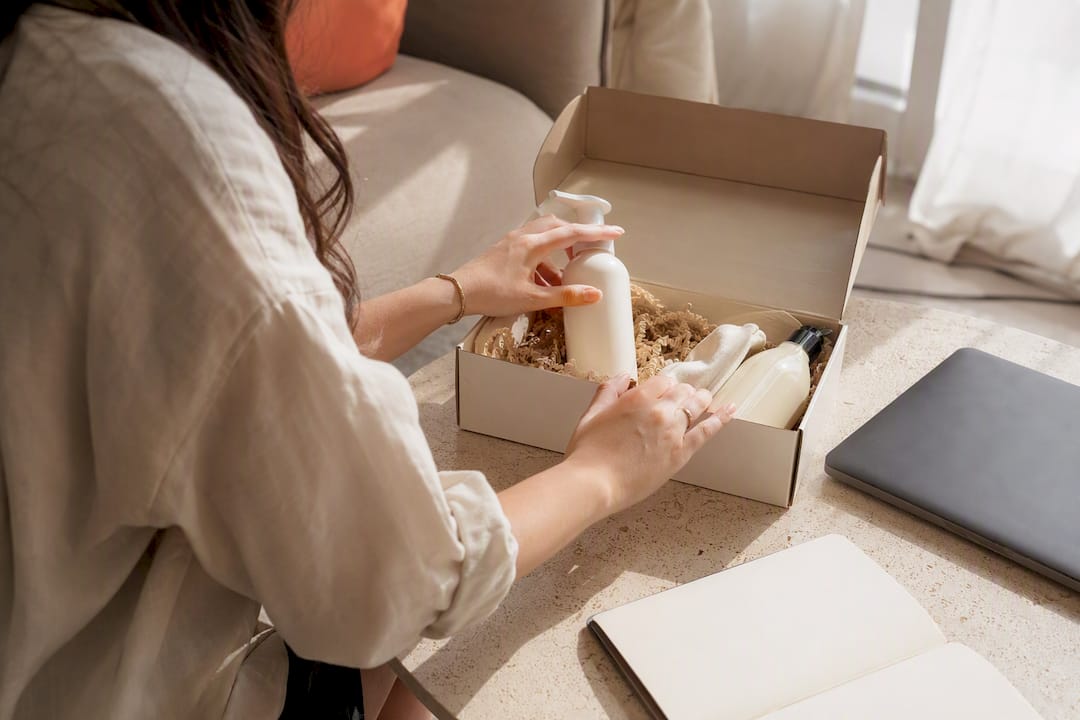
Influencer product seeding means sending free products to creators with zero obligation to post, betting that a genuine reaction earns better reach than a paid script ever could. It works best for awareness, real user-generated content, and finding creators worth paying later. Practitioner data puts a healthy post rate at 30 to 50 percent, so if you seed 100 creators, expect 30 to 50 organic posts, not a guarantee from every box you ship.
TL;DR:
- Seeding usually yields a 30 to 50 percent post rate, meaning only about a third to half of seeded creators will organically post about your product.
- Organic posts tend to be more credible and engaging when creators incorporate the product into authentic storytelling rather than just a product shot.
- Focus on content-fit, engagement, and recent posting frequency rather than follower count alone when selecting creators to maximize effectiveness.
- Operational elements like claim links, proper packaging, and follow-up timing are crucial for scaling a successful seeding program.
- A curated creator marketplace can reduce wasted effort by screening for quality and matching brands with suitable creators before shipping.
Table of Contents
- What Is Influencer Product Seeding, Exactly?
- Why Does Product Seeding Actually Work?
- Should You Seed or Pay for a Sponsored Post?
- Who Should You Actually Send Product To?
- How Do You Run a Seeding Program Step by Step?
- What Tools and Metrics Should You Track?
- What Mistakes Sink Most Seeding Programs?
- How Curated Discovery Solves the Seeding Bottleneck
- What I've Learned Running Seeding Programs
- Where Influenna Fits Into Your Seeding Strategy
- Sources
- FAQ
What Is Influencer Product Seeding, Exactly?
Product seeding is a no-strings gift. You send a creator a product, they decide whether to talk about it, and you never sign a contract that forces a post. That single detail, the absence of obligation, is what separates seeding from every other influencer transaction, and it's why Sprout Social frames seeding as a strategic test rather than a guaranteed placement: brands send widely, watch who posts, and use that behavior to identify creators worth a paid contract later.
Gifting and seeding get used interchangeably, but they aren't identical in practice. Gifting is often a one-off thank-you to a creator you already have a relationship with. Seeding is a repeatable, structured program with intake criteria, shipping logistics, and a measurement layer behind it. Paid sponsorship sits on the other end of the spectrum entirely.
- Gifting: a single free item, usually relationship-based, with no formal tracking.
- Seeding: a scaled program sending product to many creators, with post rate and cost per post tracked as KPIs.
- Paid sponsorship: a contract guaranteeing specific deliverables, usage rights, and often a fixed number of posts by a set date.
One compliance note belongs here because it applies to every tactic above: if a creator has a material connection to your brand, free product included, the FTC requires clear disclosure in the post. That rule doesn't disappear because you didn't ask for a post. It applies the moment they choose to make one.
Why Does Product Seeding Actually Work?
The short answer: people trust a person holding a product more than they trust the product sitting alone on a table. An experimental study on product placement found that consumers report higher brand credibility and more positive attitudes when an influencer appears with the product compared to product-only shots. That's not a marketing platitude, it's a measurable shift in perceived corporate credibility tied to the human presence in the frame.
Lysol leaned into this directly, inserting its air sanitizer into everyday creator moments rather than asking for a stiff product demo, betting that visual storytelling would outperform a straight pitch.
By the numbers: Practitioner benchmarks put a healthy seeding post rate at 30 to 50 percent, with landed cost per seeded creator (product cost plus shipping) typically running $25 to $170.
Compare that math to paid placements, where a single mid-tier creator post can cost more than an entire month of seeding to fifteen or twenty creators. Seeding won't guarantee reach the way a contract does, but the cost-per-touchpoint math usually favors it heavily when the goal is volume and authenticity rather than a guaranteed calendar slot.
Should You Seed or Pay for a Sponsored Post?
The decision usually comes down to what you actually need this quarter. Seeding is a discovery and awareness tool. Paid sponsorship is a reach guarantee. Confusing the two is the single most common budgeting mistake brands make.
- Choose seeding when you need broad awareness, authentic UGC for ads or your own social channels, or you're trying to find creators worth a longer relationship without committing real budget upfront.
- Choose paid sponsorship when you need guaranteed deliverables tied to a launch date, a specific message, or contractually required usage rights for paid media.
- Choose a hybrid when you're launching a new product and want both: seed broadly first, then convert your top 10 to 15 percent of organic posters into paid partners once you've seen how they actually talk about the product.
- Time seeding early. Run it four to six weeks before a launch so organic content exists before you spend on ads or PR outreach.
- Run enough volume to find signal. If a 30 to 50 percent post rate is standard, seeding fewer than 20 to 30 creators rarely produces enough posters to meaningfully evaluate who deserves a paid deal.
Budget for seeding as a discovery cost, not a guaranteed media buy. Treat every seeded creator who posts organically as a data point, and treat every one who doesn't as still useful information about fit.
Who Should You Actually Send Product To?
Follower count is the weakest filter you can use, and it's the first one most brands reach for. A creator with 8,000 followers who reviews skincare weekly and gets genuine comment engagement will usually outperform a 200,000-follower lifestyle account that posts once a week and mentions ten brands per month.
Start with content-format fit before anything else. If your product is a kitchen tool, you want creators who already film cooking content, not creators who occasionally cook on camera between other topics. Audience alignment matters more than audience size.
- Engagement rate over raw reach: a creator with 4% engagement on a small audience will typically drive more meaningful interaction than one with 0.5% engagement on a large one.
- Comment quality, not just count: look for real questions and reactions in the comments, not bot-like emoji spam.
- Recent posting behavior: a creator who's been quiet for two months is a worse bet than one posting consistently, regardless of follower count.
- Platform fit: a TikTok-native creator asked to produce a polished YouTube review may underdeliver simply because you're asking for the wrong format.
Micro and nano creators (roughly 1,000 to 50,000 followers) tend to post at higher rates and cost less per seed, making them efficient for volume seeding. Mid-tier and macro creators post less reliably per seed but produce content with broader reach when they do participate, which makes them better candidates once you've already validated fit through a smaller seed.
Operational details matter more than they get credit for. International shipping costs and customs delays can quietly kill your post rate if you're not tracking creator location before you ship. Language fit matters if your product needs explanation. And brand safety screening, checking a creator's recent posts and public statements, is worth the ten minutes it takes before you put your product in their hands.
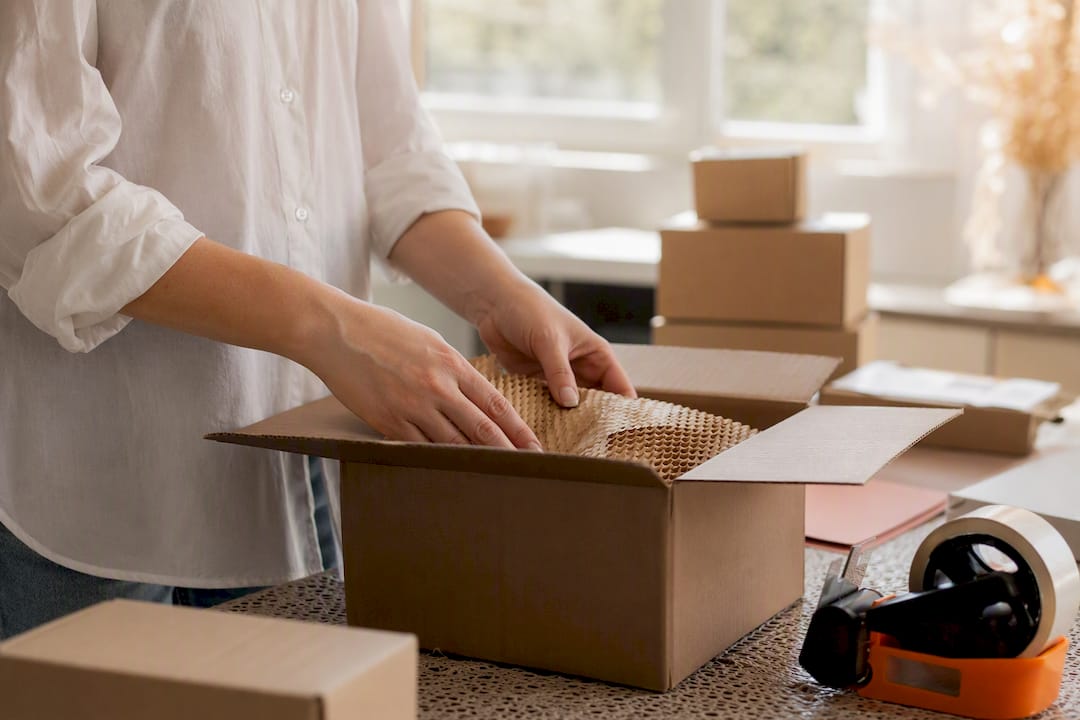
Pro Tip: Before seeding a new creator, watch their last five posts in the exact format you want back (unboxing, tutorial, haul). If they've never made that format before, don't expect them to start with your product.
How Do You Run a Seeding Program Step by Step?
Seeding fails most often from sloppy operations, not bad creator selection. Here's the sequence that actually produces results.
Set your targets before you ship anything. Decide your target post rate (30 to 50 percent is the practitioner benchmark), your acceptable cost per post, and a rough estimated media value (EMV) goal. Without these numbers up front, you'll have no way to know if the program worked.
Write outreach that respects the creator's time. A short, specific message outperforms a generic template every time. Mention something concrete about their content, state clearly that there's no posting requirement, and make the ask easy to say yes to.
- Identify the creator and the specific piece of content that made you want to reach out.
- Send a short message naming that content, explaining the product, and stating plainly there's no obligation to post.
- Use a claim link so the creator enters their own shipping address and confirms consent, rather than you collecting personal information manually over DM.
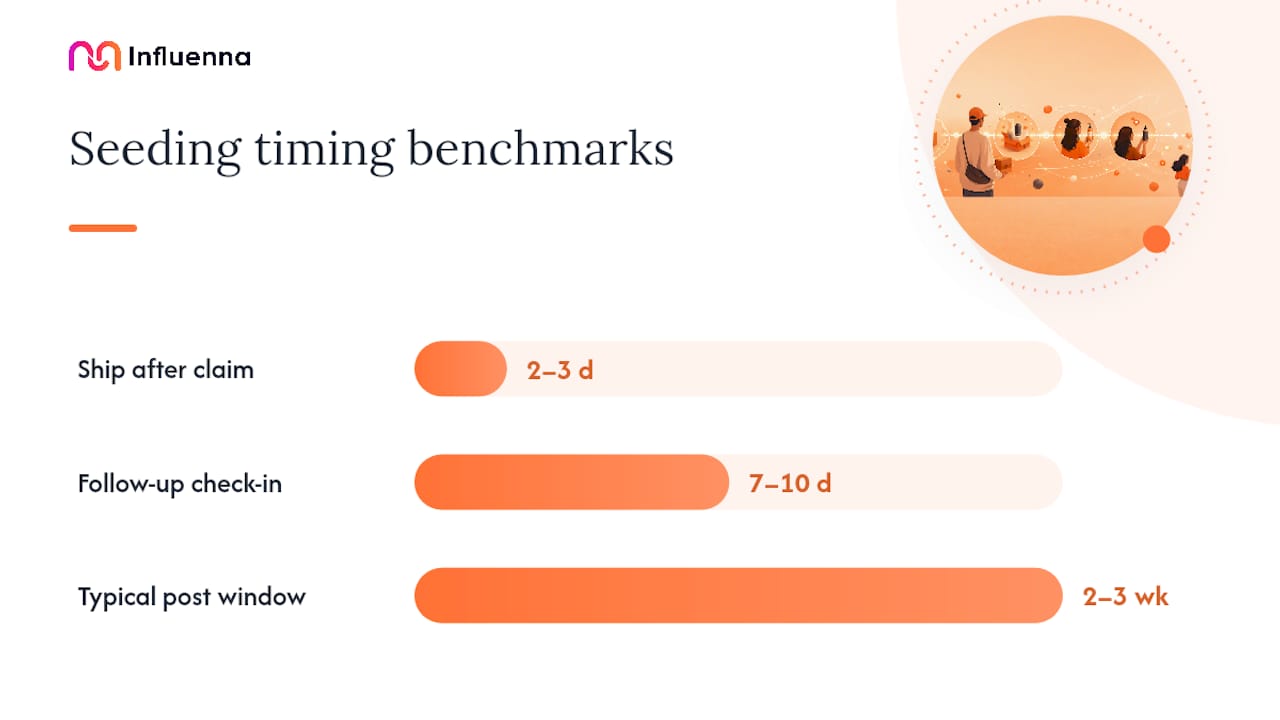
- Ship promptly, ideally within 48 to 72 hours of claim, since interest fades fast.
- Follow up once, seven to ten days after delivery, with a friendly check-in, not a demand for content.
Claim links solve a real operational headache: nobody wants to hand their home address to a brand over Instagram DM, and manually collecting addresses at scale is a data management nightmare. A claim-link flow lets the creator self-serve their shipping details and consent in one step, which speeds up fulfillment and keeps you compliant with basic data hygiene.
Packaging matters more than most brands think. Since influencer-with-product content outperforms flat product shots on credibility, packaging that invites use, rather than packaging optimized purely for unboxing spectacle, increases the odds a creator actually picks the thing up and uses it on camera. A card with a simple, specific content idea works better than a generic "tag us!" insert.
The follow-up window is where most brands leave posts on the table. Creators who plan to post usually do so within two to three weeks of receiving product. A single, warm check-in at the seven-to-ten day mark, not a pushy reminder, meaningfully lifts your post rate without crossing into coercion.
- Send fulfillment within 72 hours of claim to catch peak interest.
- Follow up once, politely, around day 7 to 10.
- Archive every piece of content that comes back, tagged by creator and product.
- Request usage rights explicitly and separately if you want to repurpose content in ads, and offer fair compensation for that expanded use.
What Tools and Metrics Should You Track?
Manual seeding, spreadsheets, DMs, and address collection by hand, breaks down fast past a few dozen creators per month. The operational features that matter at scale are claim links for self-serve address and consent collection, ecommerce integration (Shopify and similar platforms) to connect seeds directly to sales data, automated content capture so posts get logged without someone manually screenshotting Instagram, and rights management to track what you're cleared to repurpose.
Automated content capture in particular is the feature that separates a manual seeding effort from something that actually scales into a repeatable UGC engine, since chasing down screenshots one creator at a time doesn't hold up past a certain volume.
The metrics worth reporting to stakeholders:
- Post rate: percentage of seeded creators who publish content, benchmarked against the 30 to 50 percent range.
- Cost per post (CPP): total seeding spend divided by number of posts received, which only looks reasonable once you know your post rate.
- Estimated media value (EMV): a proxy for what equivalent paid reach would have cost.
- Referral traffic and code-attributed sales: tracked through unique discount codes or UTM-tagged links per creator.
Set up unique tracking codes and UTM parameters before you ship a single unit, not after the first posts land. Retrofitting attribution onto content that's already live is far harder than building it in from the start. A basic monitoring checklist, checking claim status, shipment status, and post activity weekly, catches problems (a stuck shipment, a creator who claimed but never received product) before they quietly tank your post rate.
What Mistakes Sink Most Seeding Programs?
Disclosure isn't optional, and it isn't yours to skip on a creator's behalf. Ask for it directly and simply: "if you post, please disclose the product was gifted." That's compliant and non-coercive. What crosses the line is pressuring a creator into softening or hiding the disclosure to make the post feel more organic than it is.
Mandating content is the fastest way to turn seeding into disguised advertising, and it undermines the entire premise of the tactic. If you need a guaranteed post, that's a paid sponsorship, not seeding, and experts are consistent that blending the two erodes the authenticity seeding is supposed to buy you.
- Mass, copy-paste outreach reads as spam and tanks response rates.
- Sending product with no context about why that creator specifically was chosen wastes both your budget and their time.
- Treating a low post rate as a mystery instead of a diagnosis, check creator fit, packaging, and follow-up timing before blaming the tactic itself.
- Repurposing content without asking first, or without offering fair compensation for expanded usage, damages a relationship you might want again.
Audit who you're sending to before you audit anything else.*
How Curated Discovery Solves the Seeding Bottleneck
Most seeding programs stall on the same problem: finding creators worth the shipping cost in the first place. Cold outreach based on a follower count filter produces a lot of wasted product and even more silence.
A curated marketplace changes that math by putting verified, human-reviewed creator profiles in front of brands before a single package ships, which cuts down on sending product to accounts that were never a fit. Structured collaboration requests replace the cold DM entirely: a brand states what it's offering and what it's looking for, and a creator can accept or decline with actual information in hand, not a guess based on a vague message.
Privacy matters here too. Contact details only unlock after both sides approve a request, which means no creator is handing over a home address or phone number before they've decided the collaboration is worth pursuing. That structure alone tends to produce higher-quality responses than a public claim link blasted to a cold list, because both sides opted in with real information first.
What I've Learned Running Seeding Programs
Seeding rewards patience more than volume. The brands that treat it as a slow filter, seeding consistently, tracking who posts and who doesn't, and converting the reliable posters into paid partners over time, get more out of it than the ones chasing a big one-time send.
The 48-hour checklist I'd hand anyone starting this week: pick your target post rate, write a claim-link flow that collects consent cleanly, and draft one outreach message that names something specific about the creator before you send a single unit. Cadence beats scale here, every time.
— Igor
Where Influenna Fits Into Your Seeding Strategy
The hardest part of seeding isn't the shipping, it's finding creators worth shipping to and starting that conversation without it reading as spam. Influenna is a curated, four-sided marketplace connecting creators, brands, talent agencies, and influencer marketing agencies, and every account is reviewed by a person before it gets access.
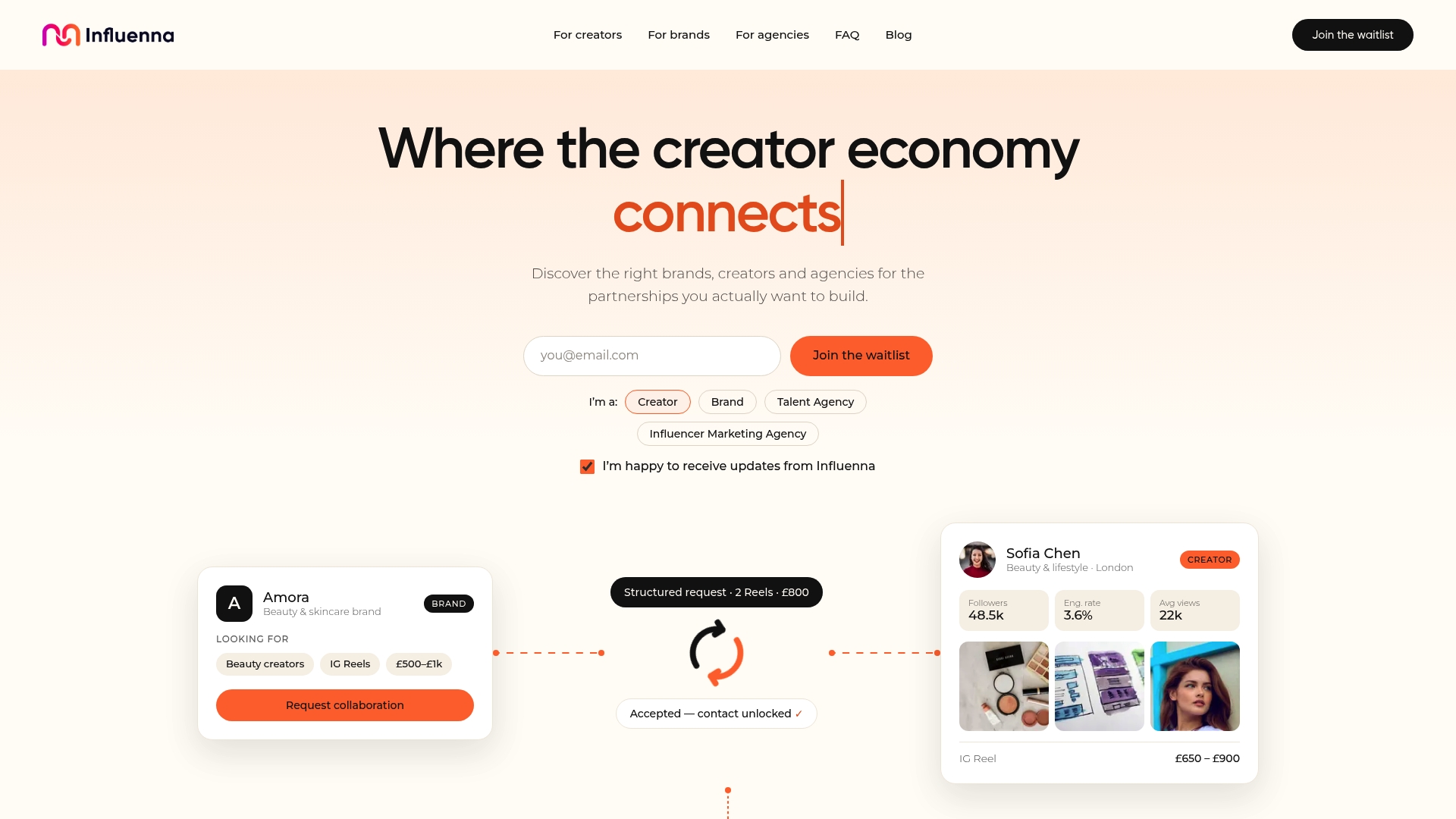
Instead of cold DMs, you send structured collaboration requests that spell out what you're offering and what you need, and contact details only exchange hands once both sides say yes. That privacy-by-default structure matters for the same reason independent research on app data practices keeps surfacing: creators respond better when they trust how their information gets handled. If your seeding pipeline currently depends on scraped emails and guesswork, join the Influenna waitlist to get early access when the marketplace opens.
Sources
- Influencer seeding | Sprout Social
- What Is Product Seeding? Meaning, Examples & How It Works (2026)
- The FTC's Endorsement Guides: What People Are Noticing About Influencer Marketing
- Product placement 2.0: “Do Brands Need Influencers, or Do Influencers Need Brands?”
FAQ
What Does Seeding Mean in Marketing?
Seeding means giving a product to a creator or customer with no obligation to post, hoping the organic reaction generates authentic reach and word-of-mouth rather than a paid, guaranteed placement.
What Does "Creator Seeding" Mean?
Creator seeding is the same concept applied specifically to influencers and content creators: brands send free product to a curated list of creators and track who posts, using post rate as a filter for future paid partnerships.
What Are the Four Types of Influencers?
Influencers are commonly grouped by audience size into nano (roughly 1,000 to 50,000 followers), mid-tier, macro, and mega or celebrity influencers with larger followings, with post rates and engagement typically shifting as size increases.
What Are Common Niches Influencers Work In?
Beauty, fashion, fitness, food, and tech are five of the most common influencer niches, each with distinct content formats and audience expectations that brands should match before seeding product.
How Do I Know if My Post Rate Is Healthy?
A post rate between 30 and 50 percent is considered healthy by practitioner benchmarks; anything meaningfully lower usually points to a targeting or packaging problem rather than a flaw in seeding as a tactic.